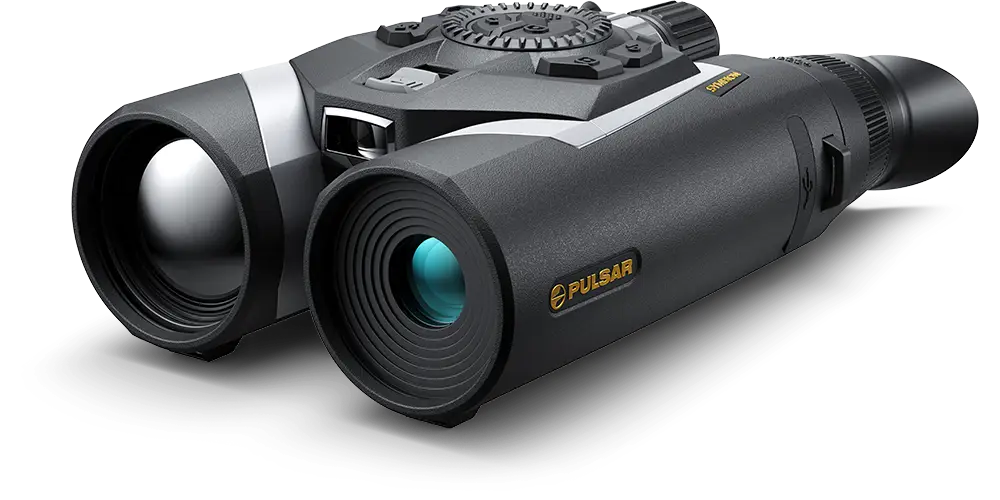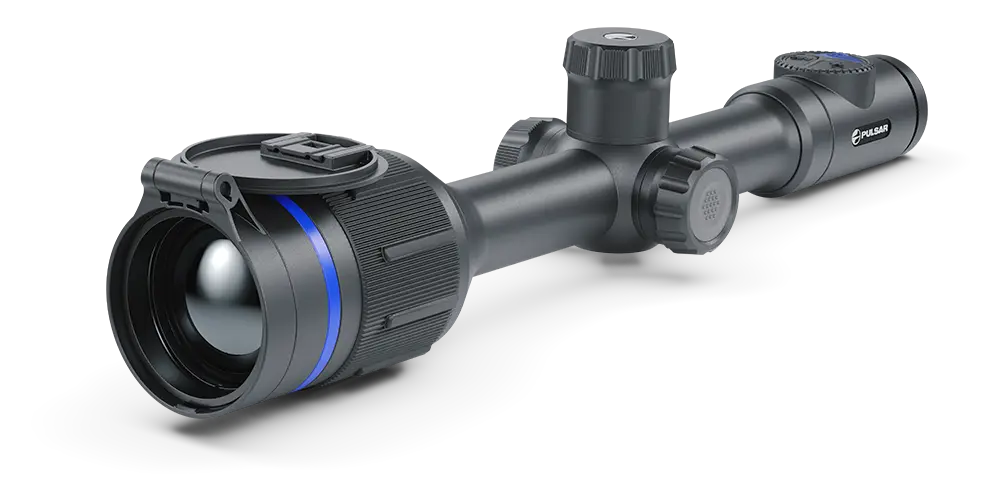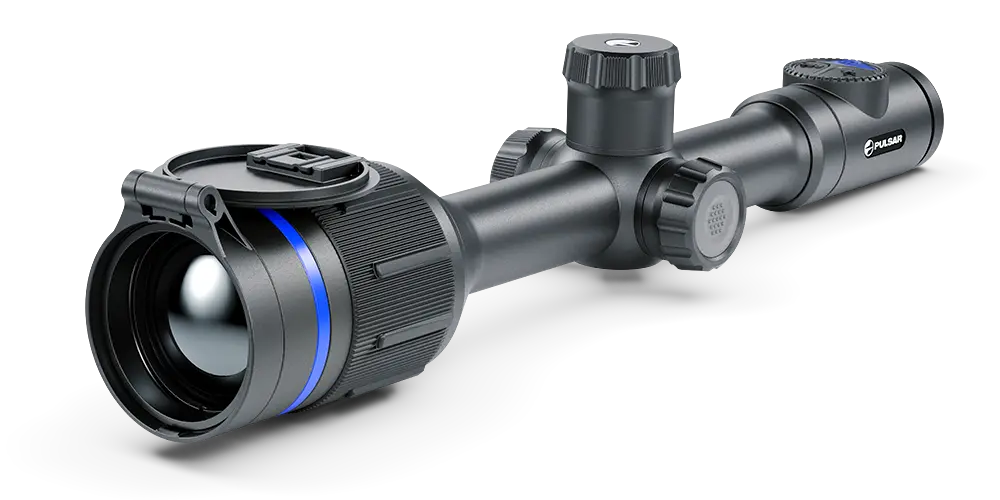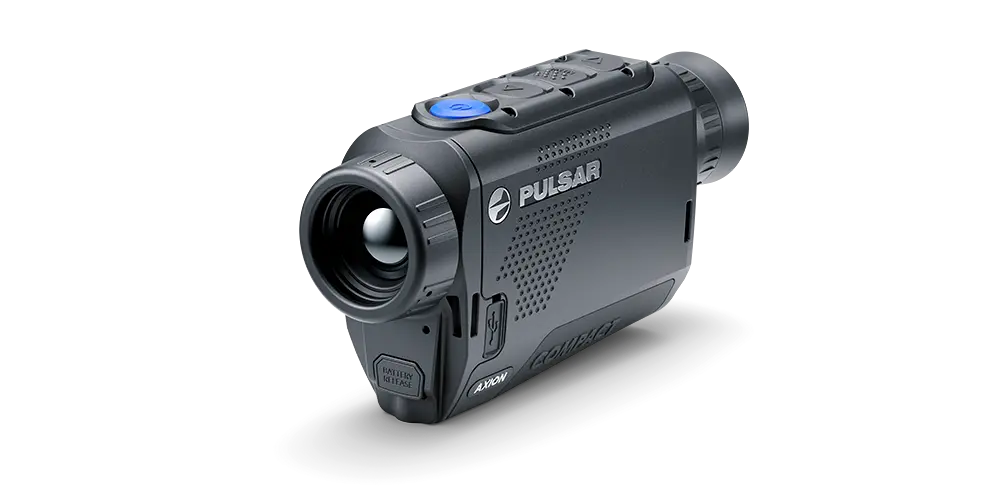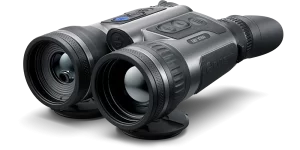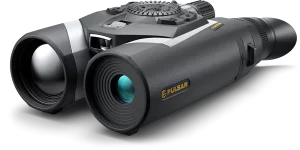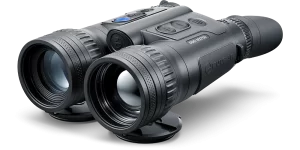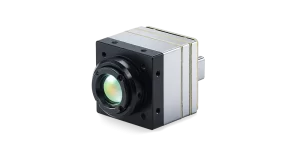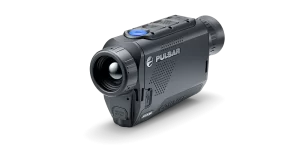

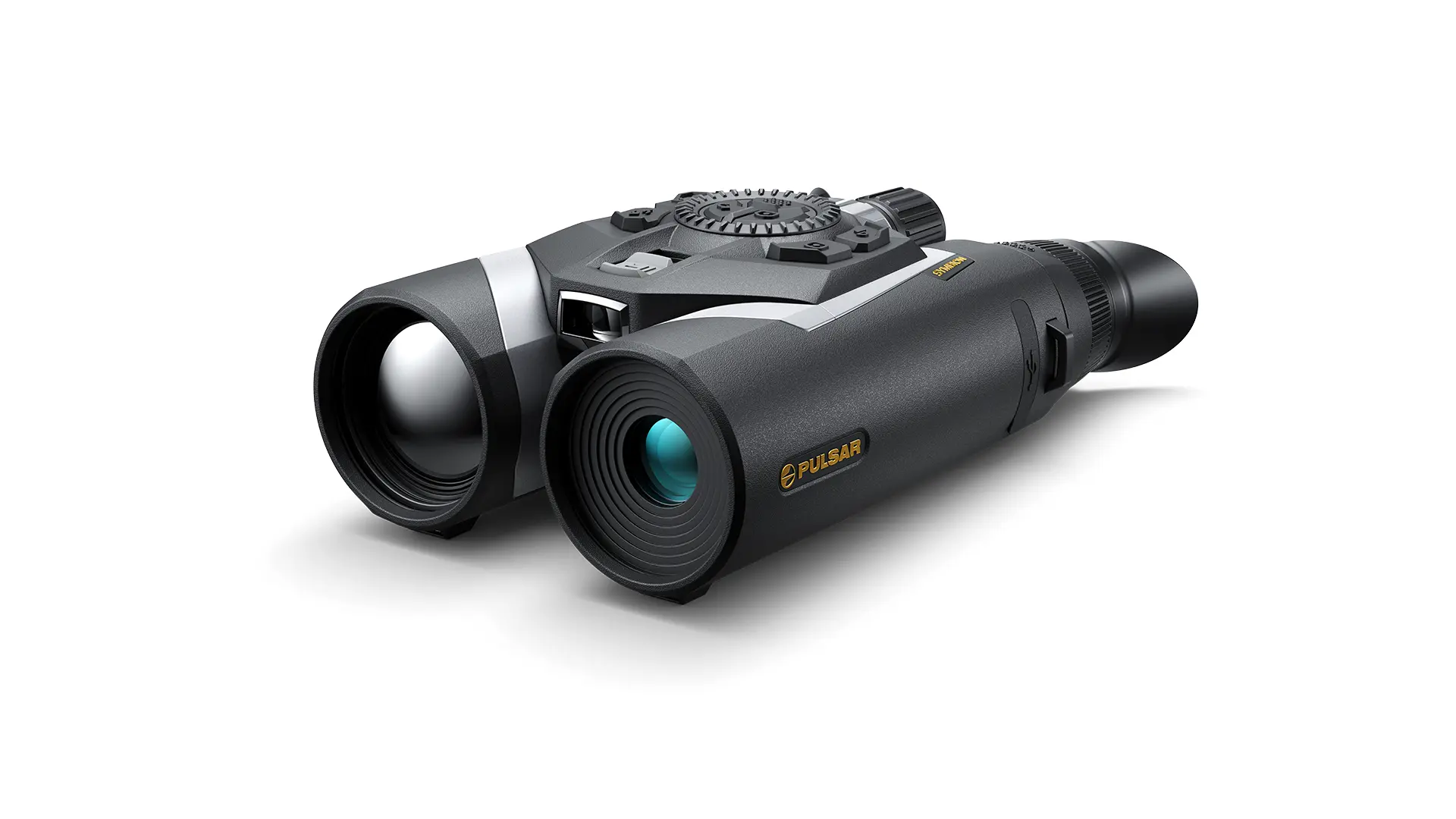
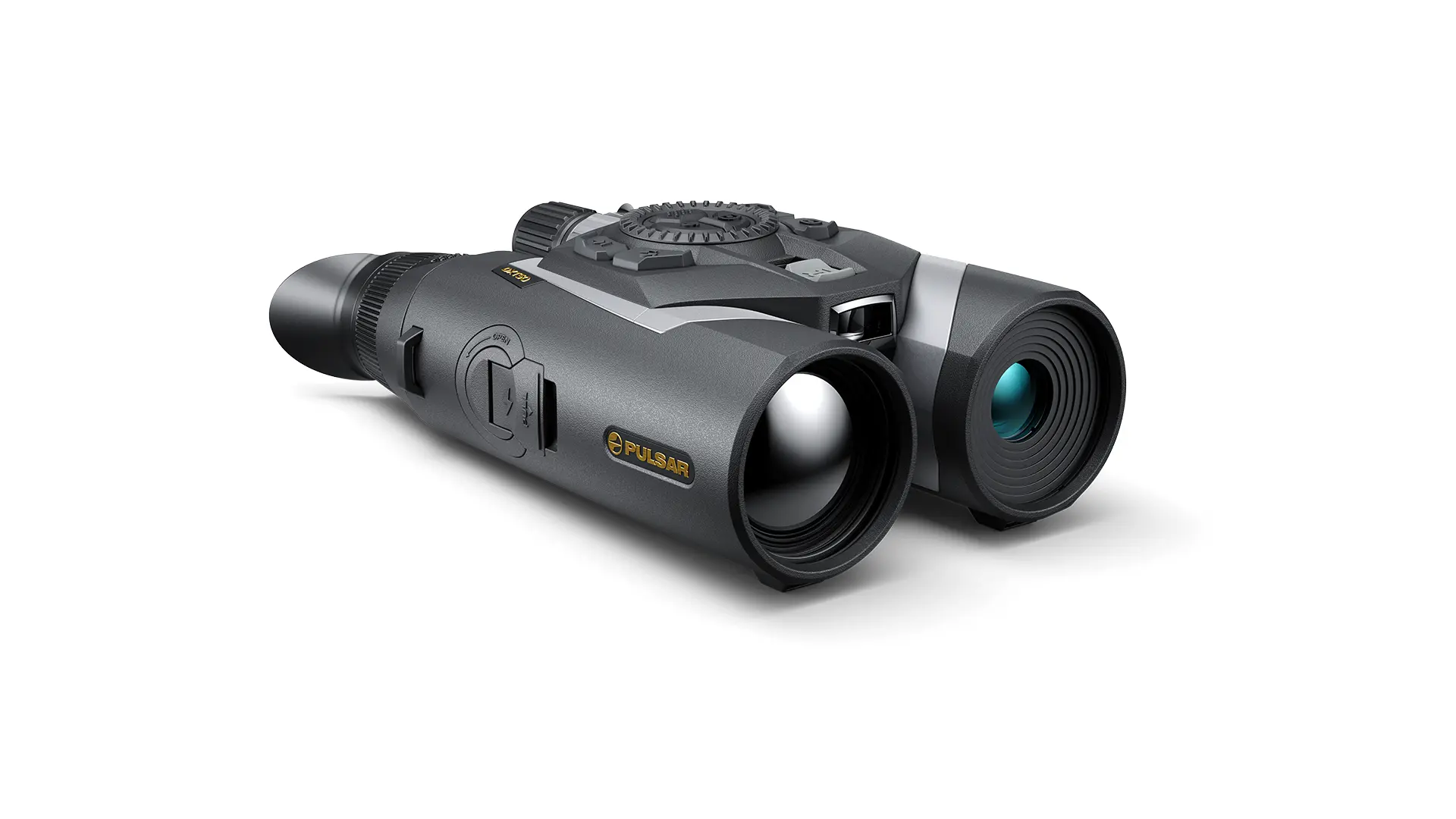
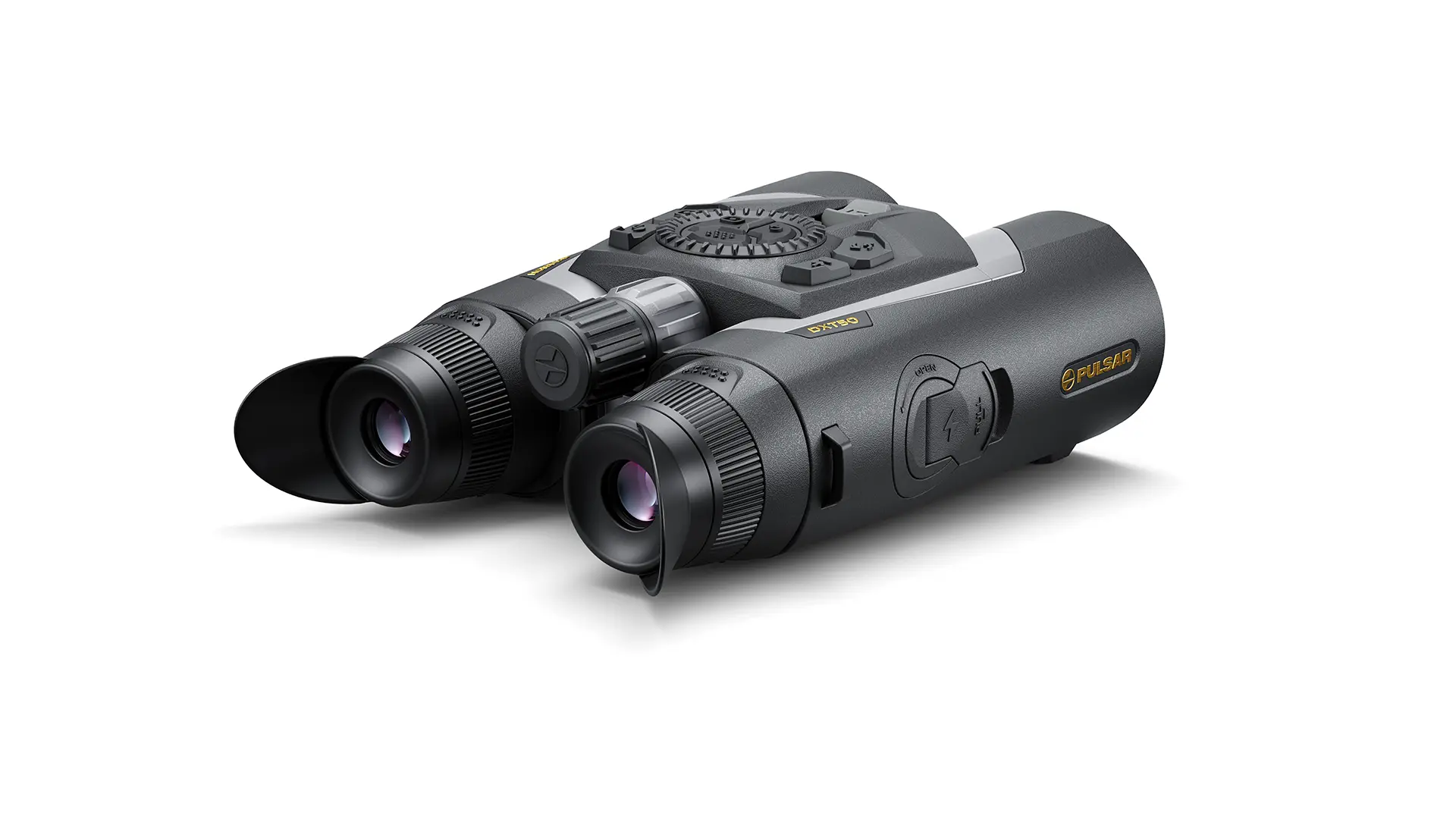
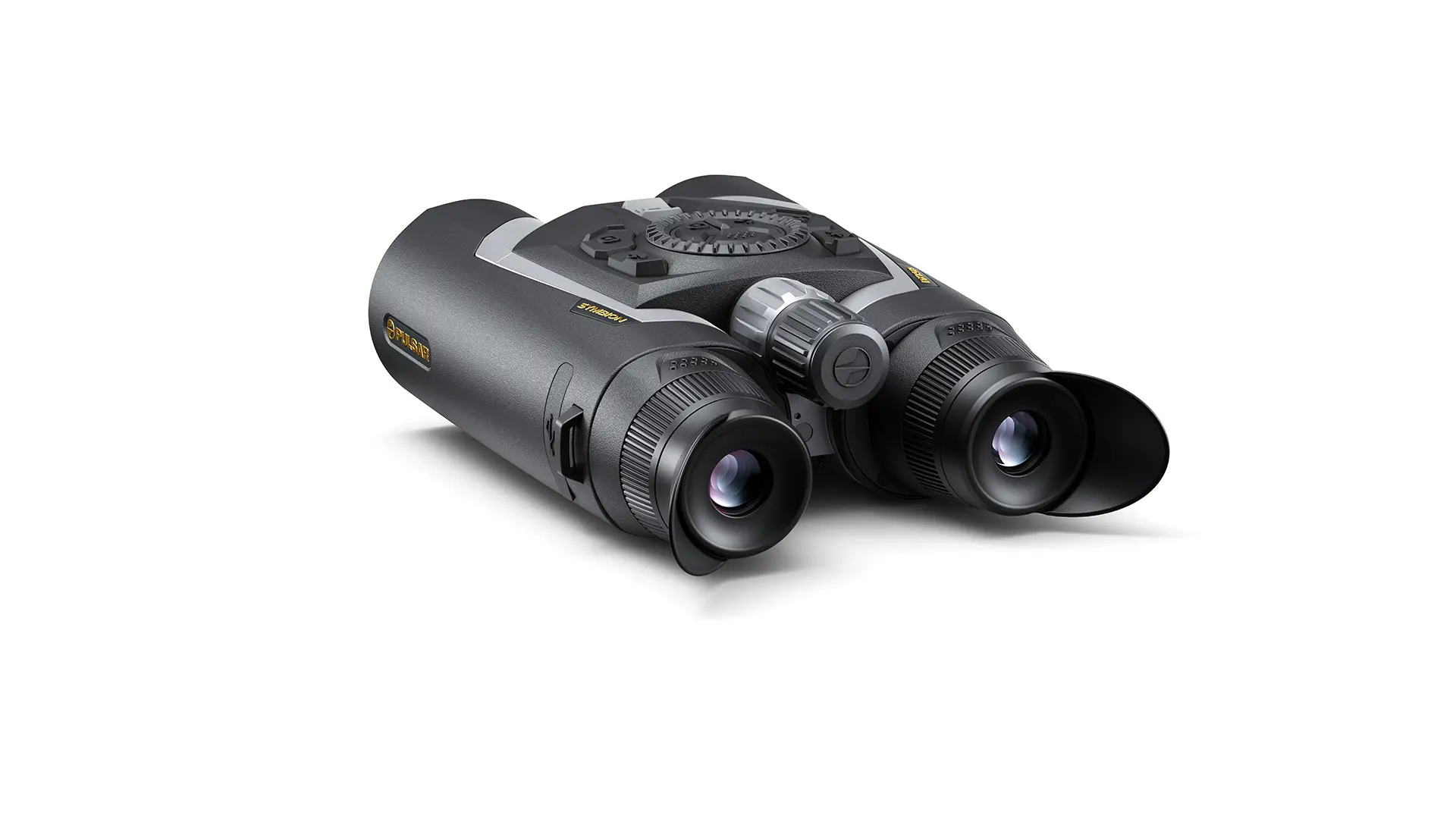
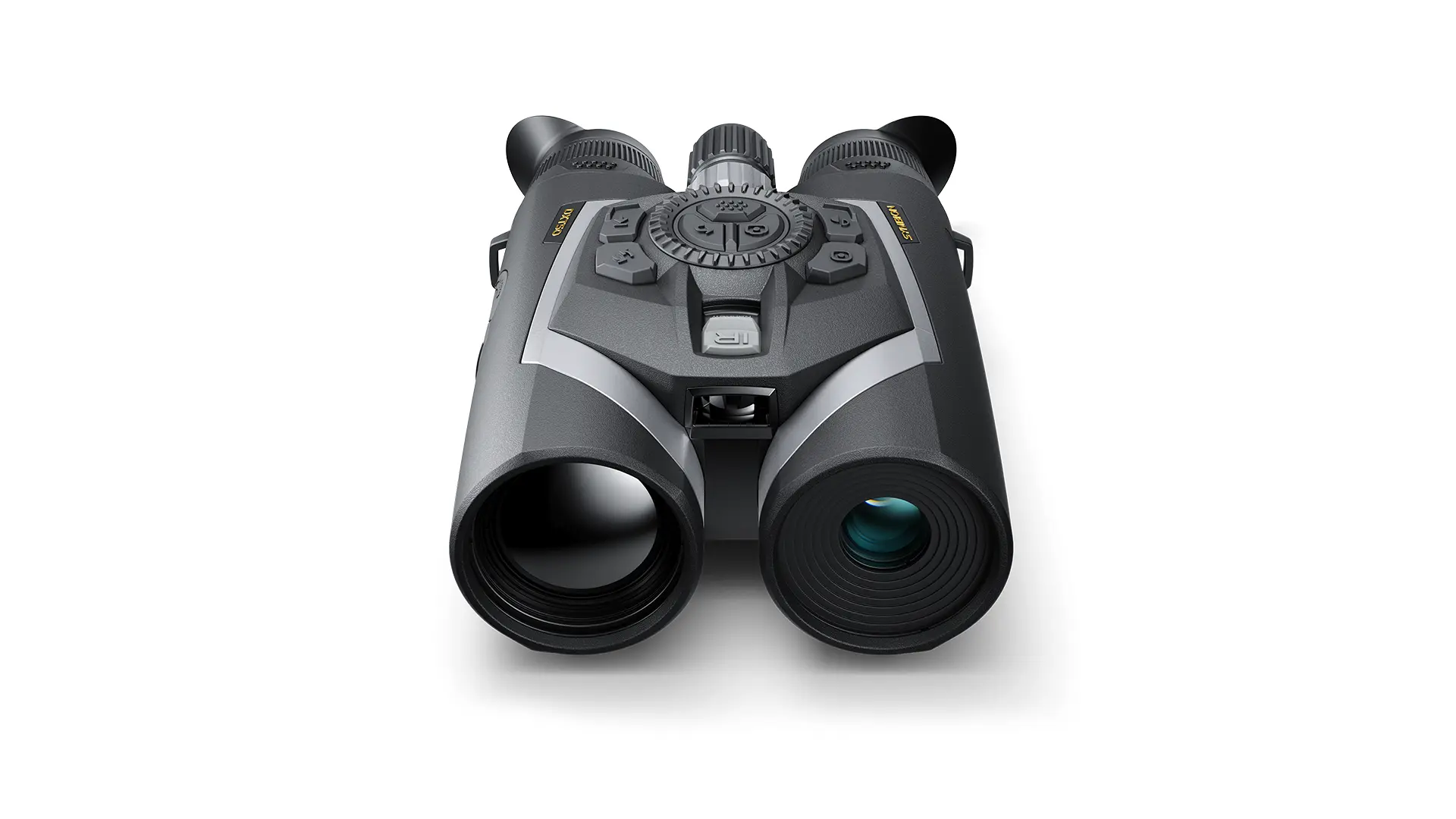
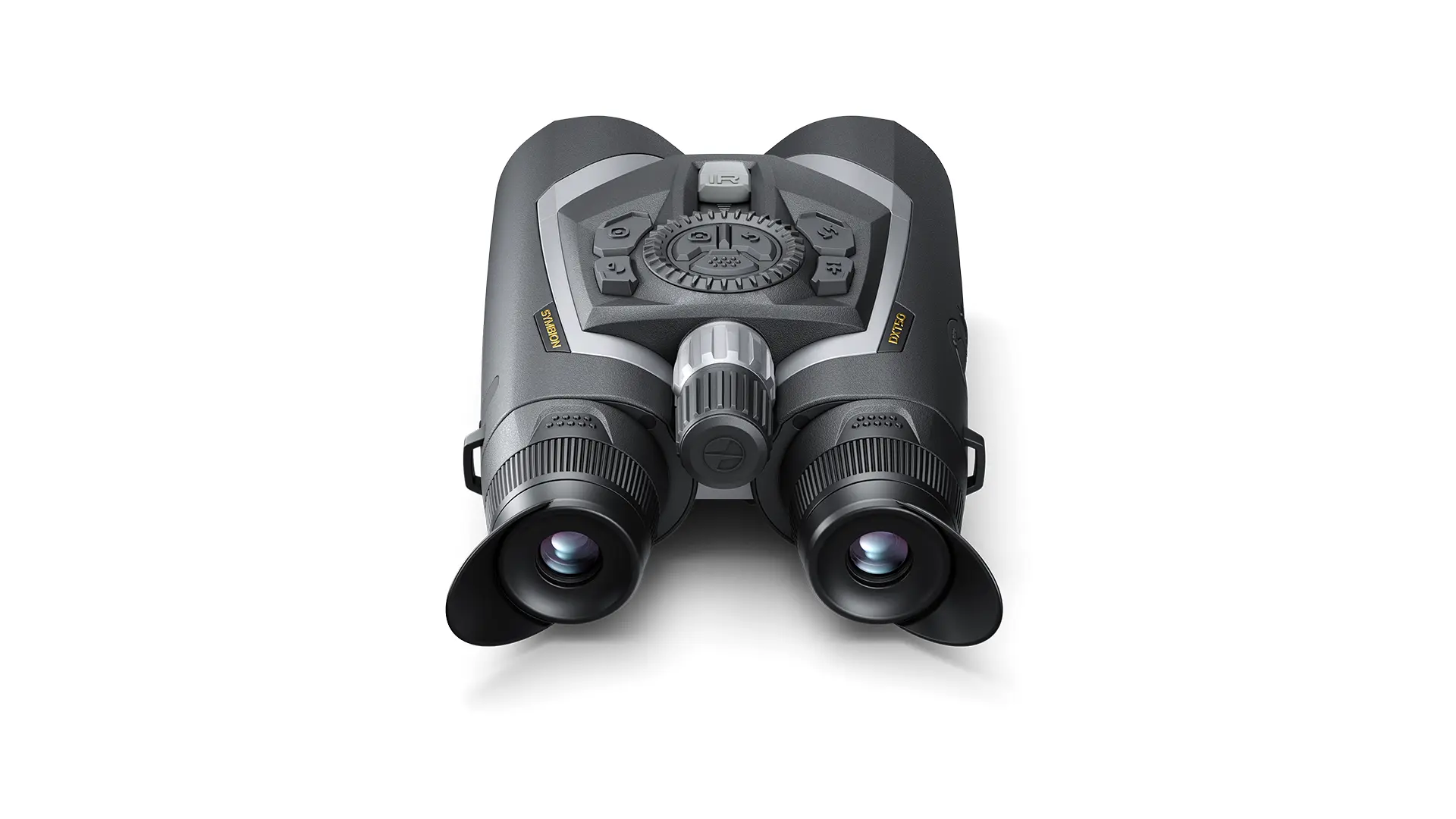

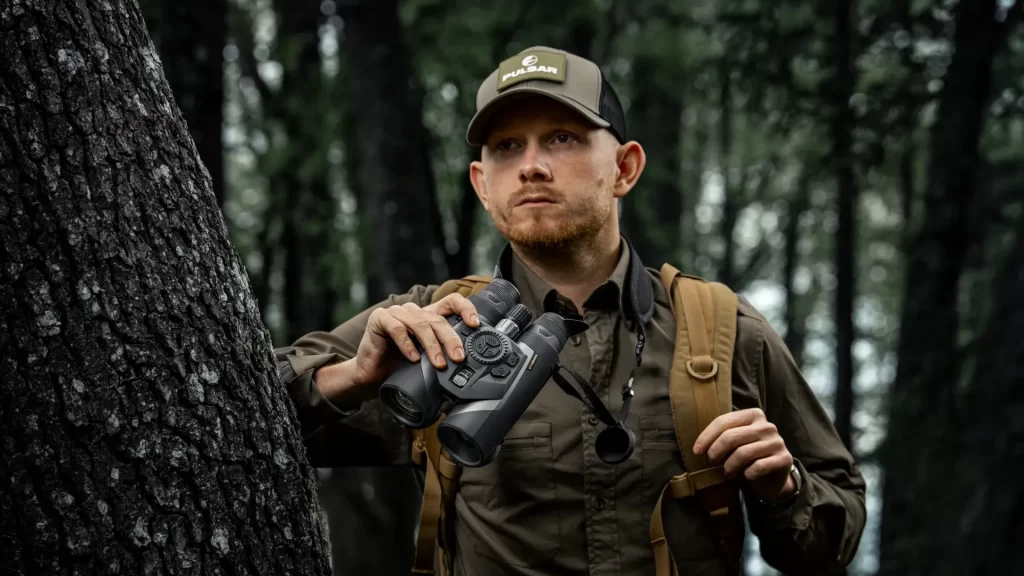

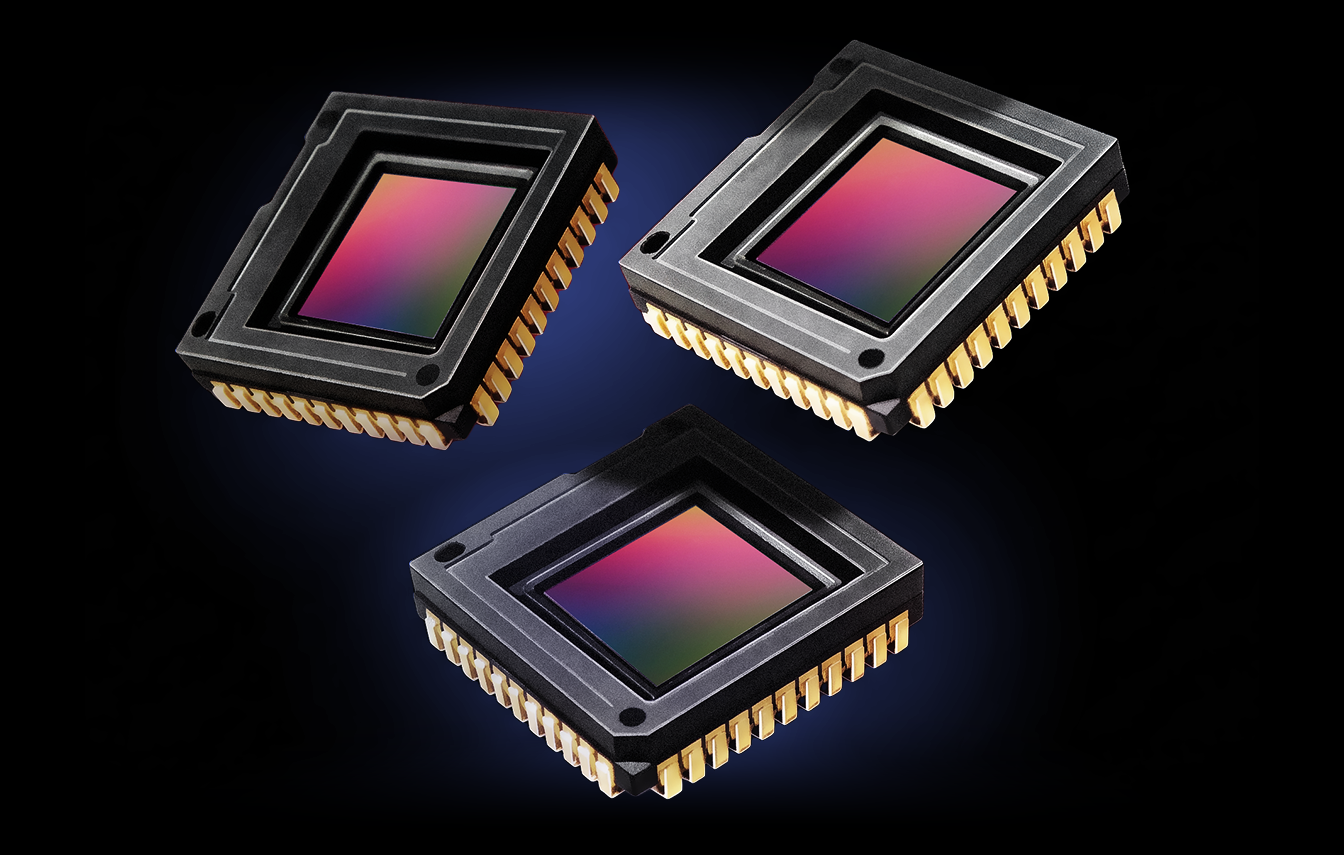
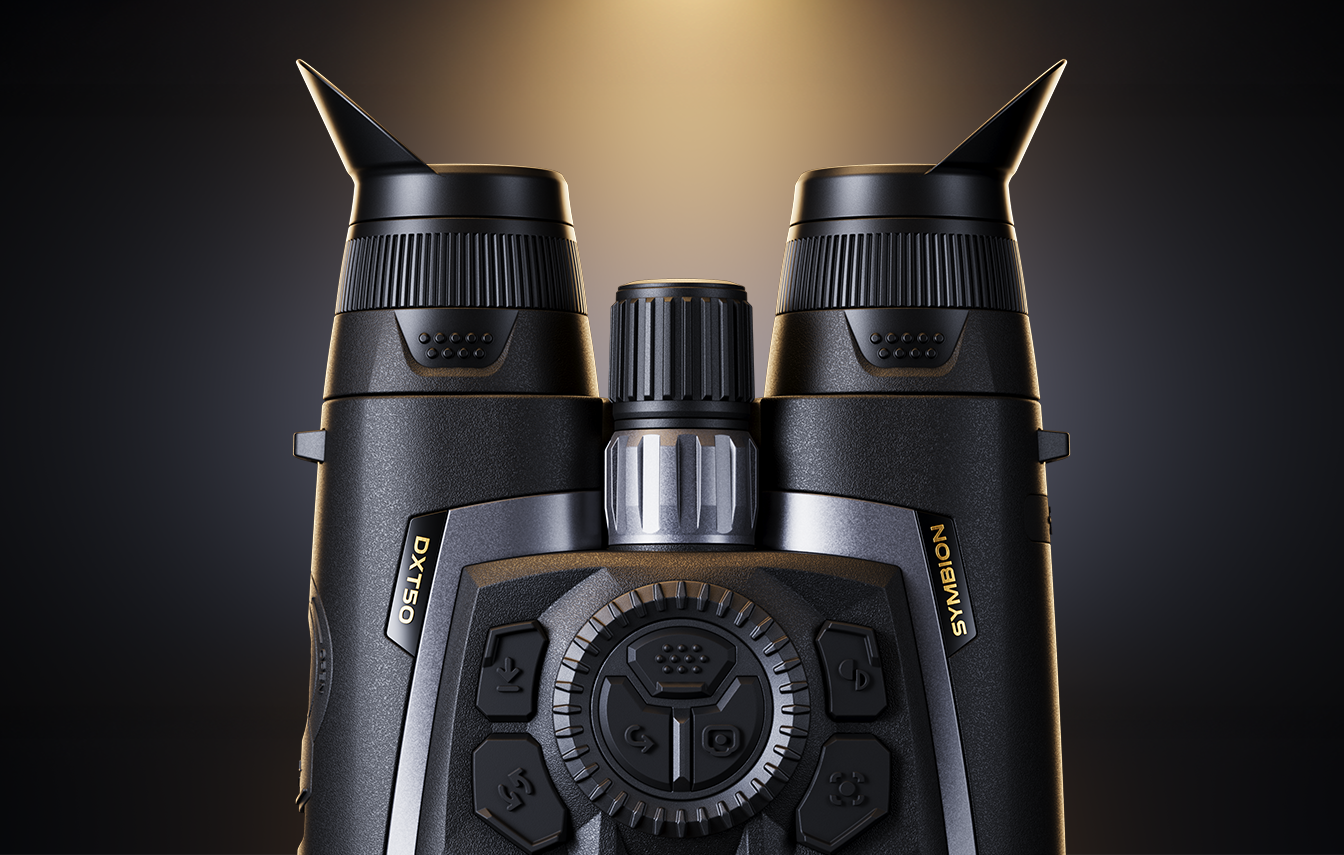
Behind Symbion LRF DXT50’s image quality is a 1280×1024, 12 µm sensor, built to deliver some of the sharpest thermal detail available in a binocular. It’s the kind of clarity that makes the DXT50 a strong all-around choice, not just a specialist’s tool.
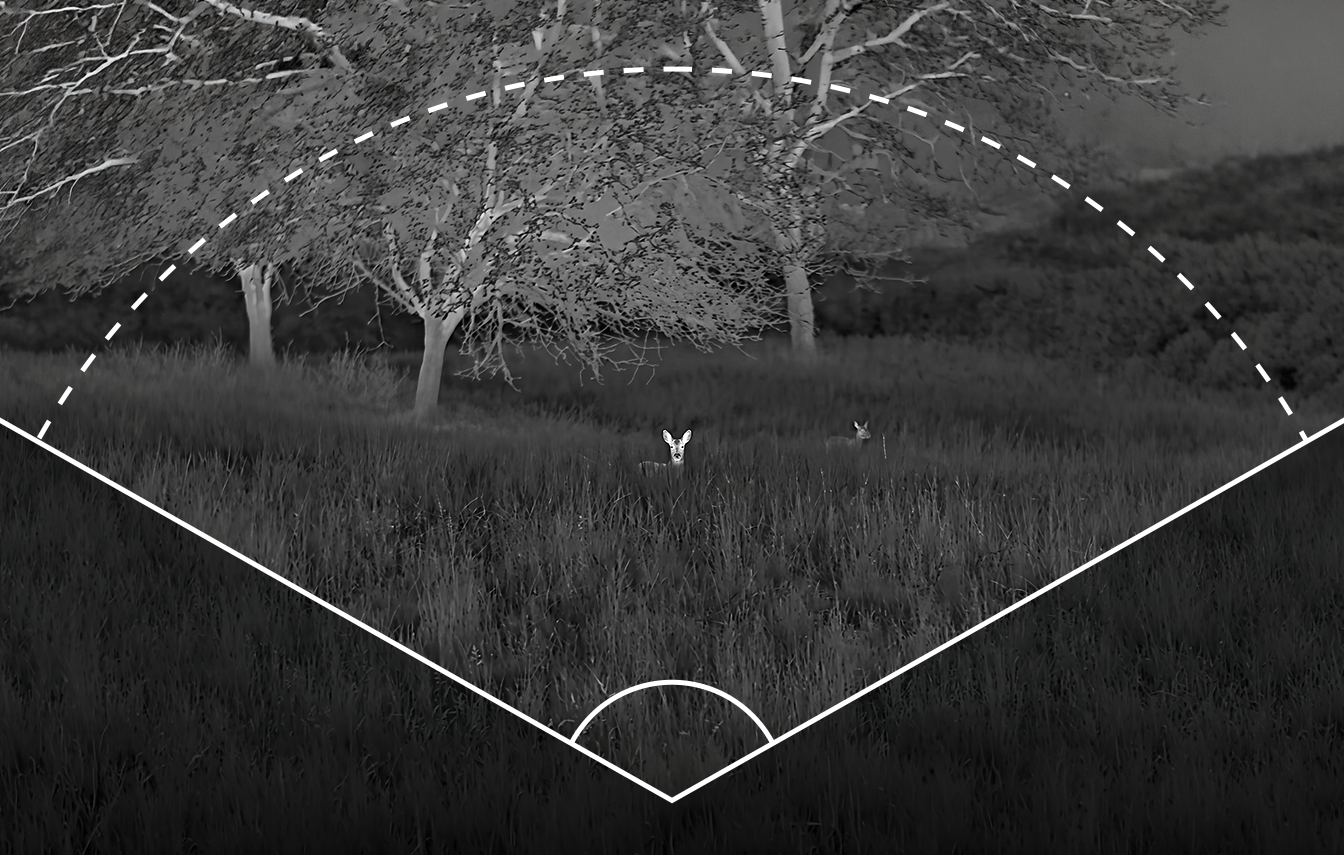
At 17.5°, the thermal field of view is built for wide, open ground, keeping enough of the landscape in frame to catch movement before it’s directly ahead of you. For predator hunters watching for activity at the edges, that extra width often matters more than magnification.
NETD • thermal sensitivity
thermal magnification
LRF distance
operation time
Spot a heat signature and combine it with a digital view in Picture-in-Picture mode. You can confirm exactly what you’re looking at before deciding how to act, without losing the surrounding view.
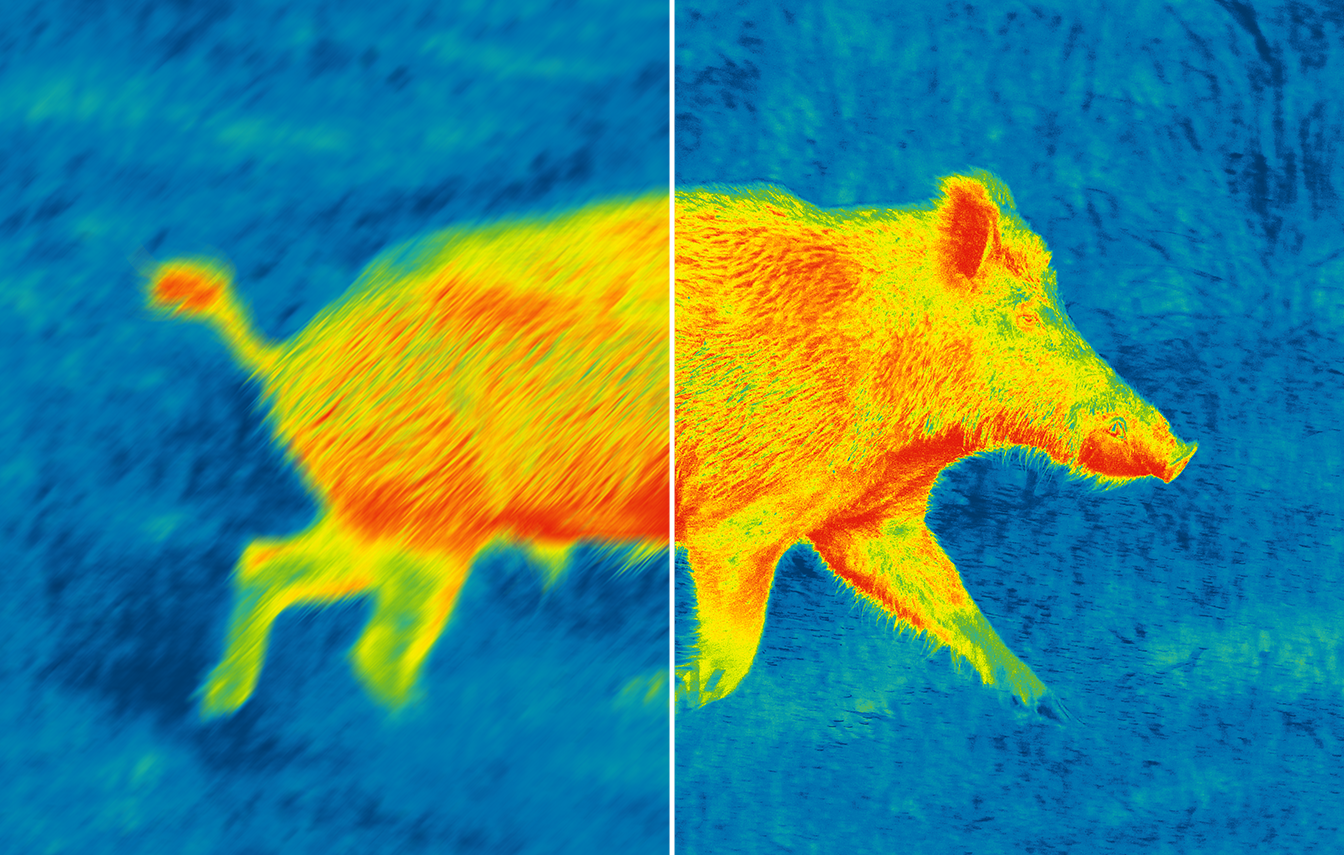
Symbon LRF DXT50 compensates for hand movement through electronic image stabilization. Scanning terrain or tracking game at higher magnification no longer comes with the usual tradeoff in image clarity. The view stays sharp, effort stays low.