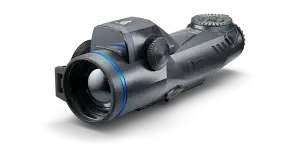
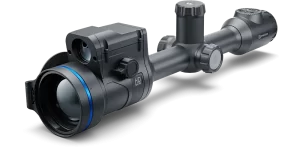
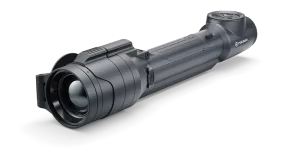
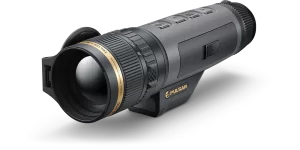
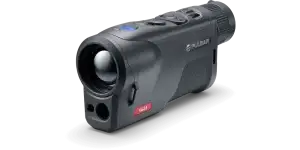
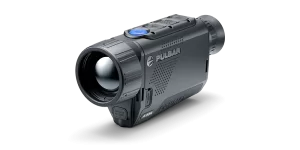
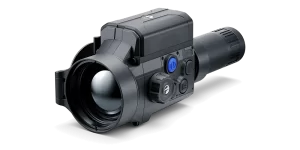
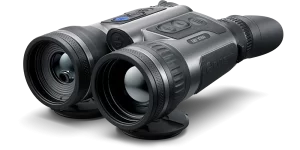
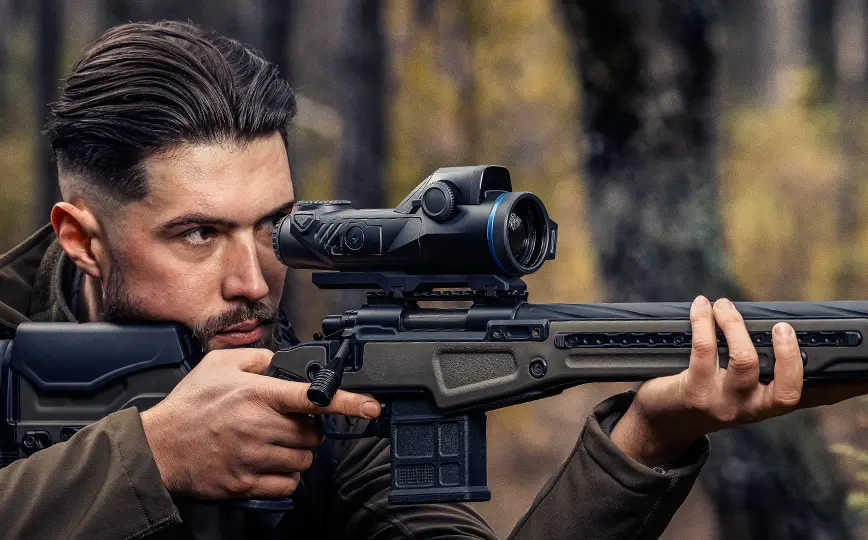
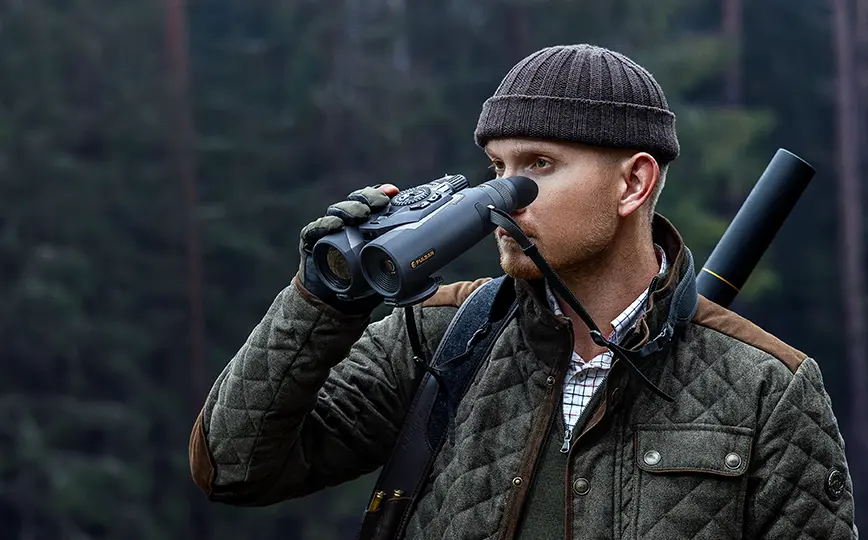
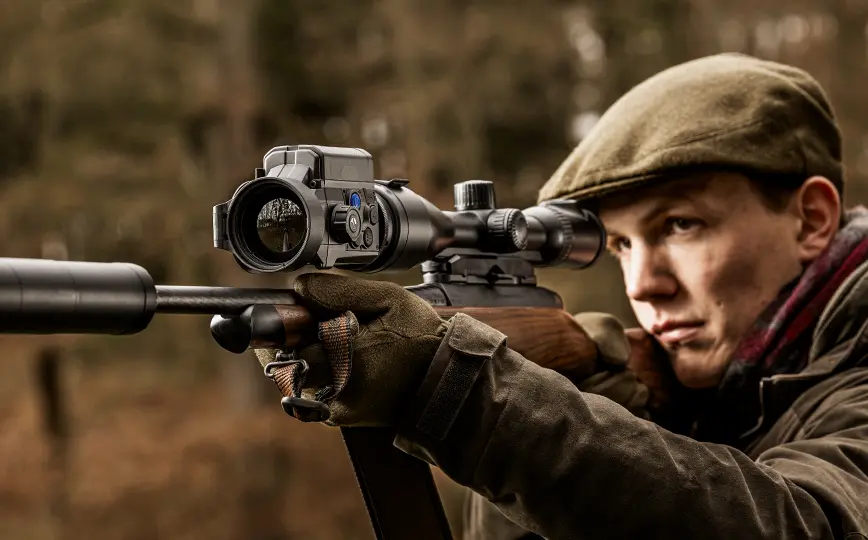
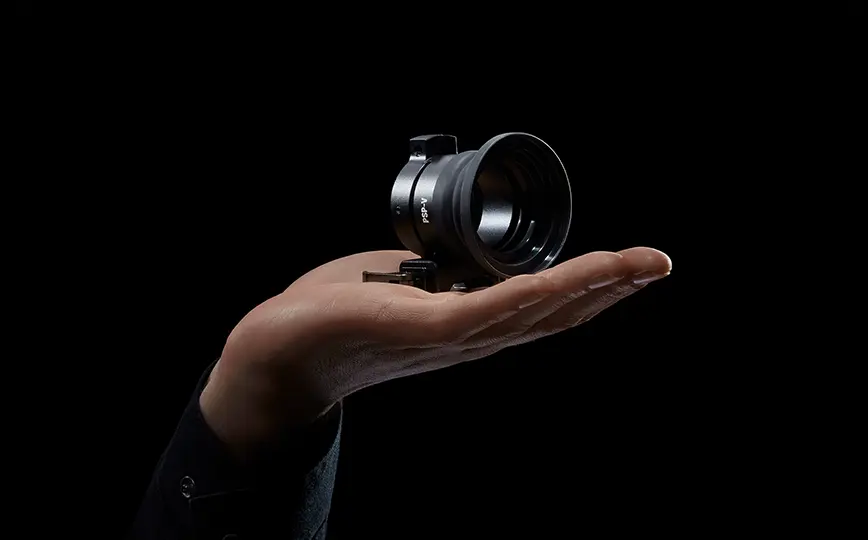
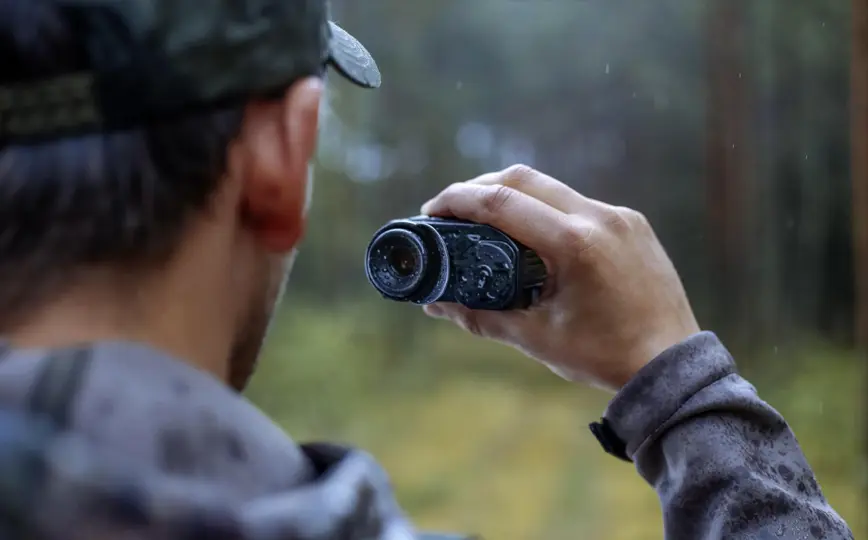
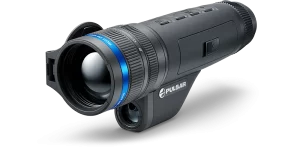
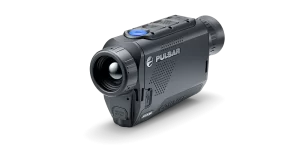
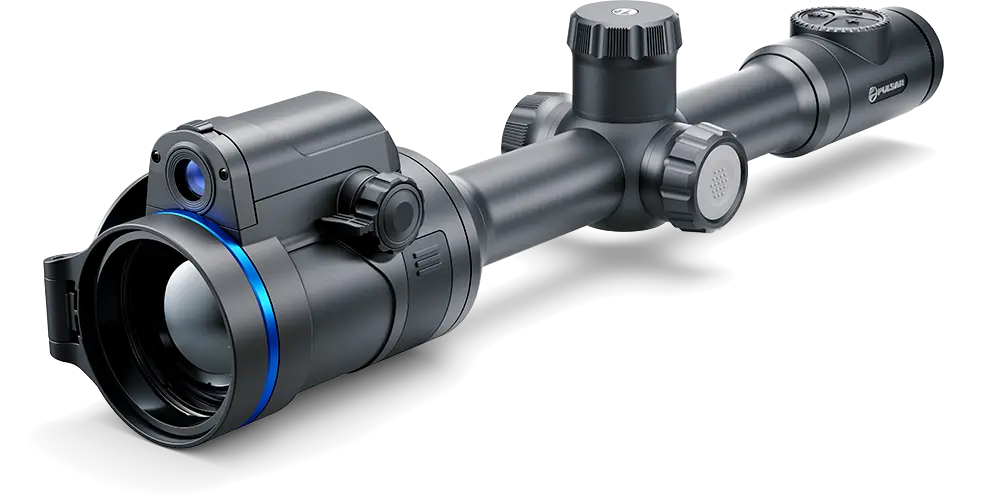
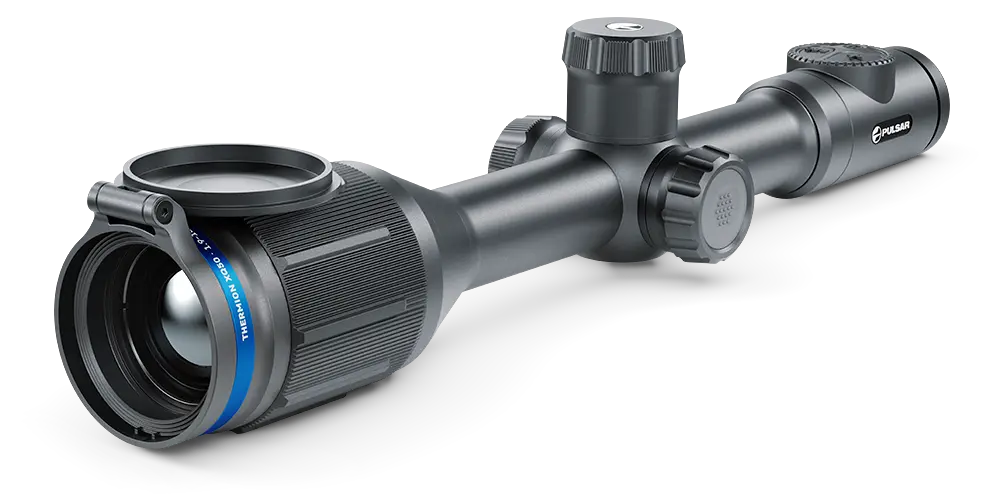
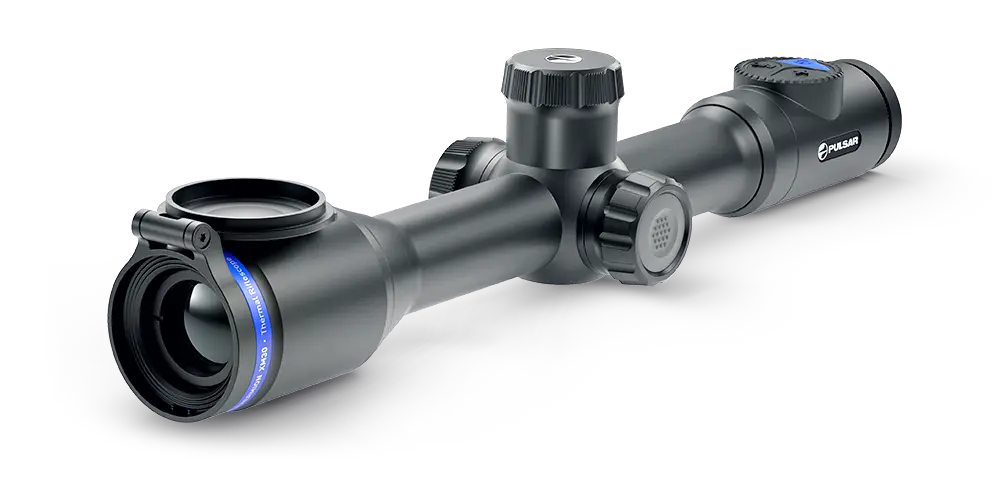
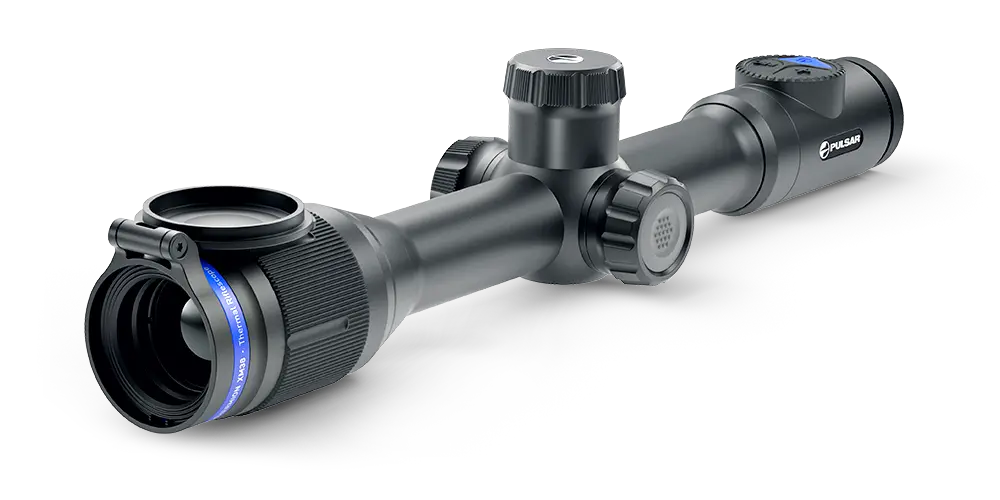
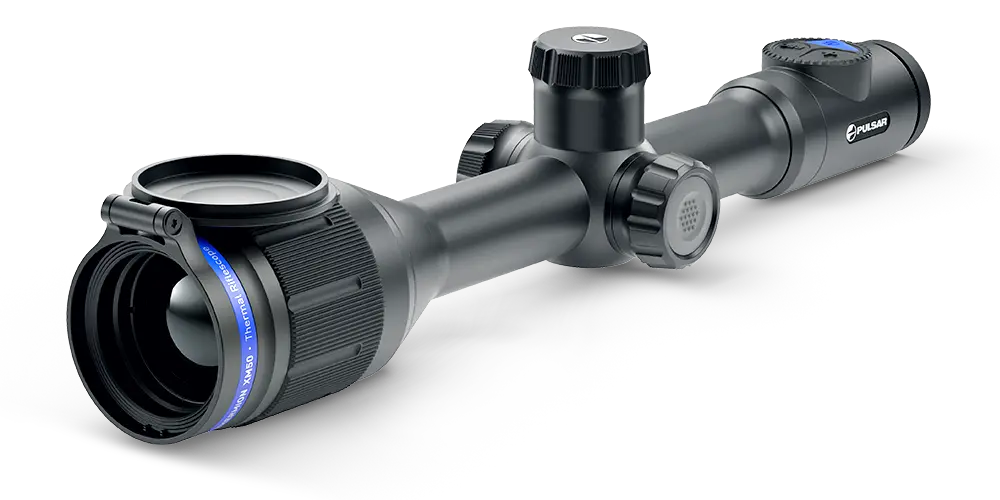
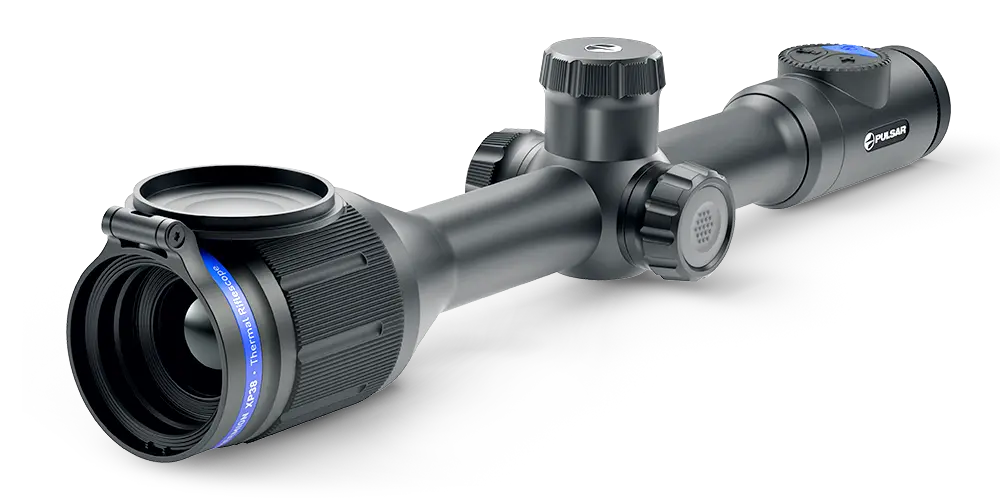
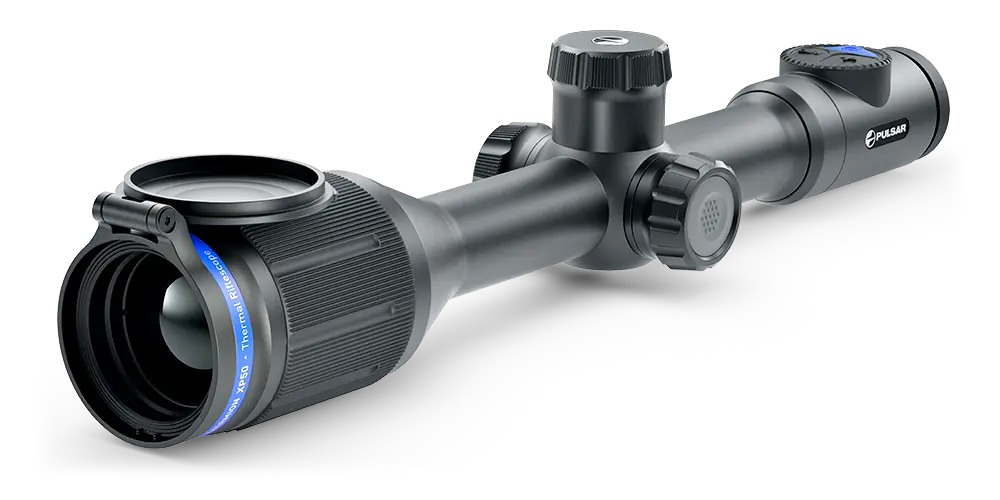
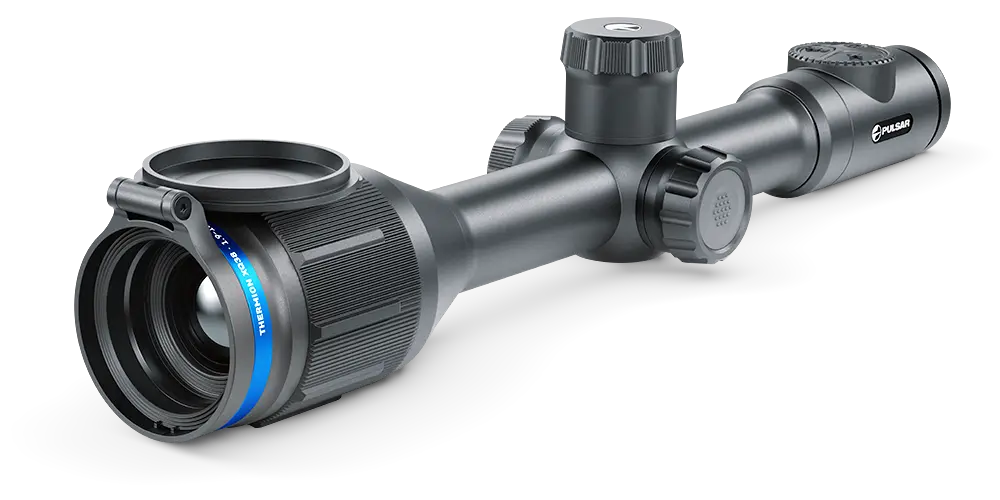
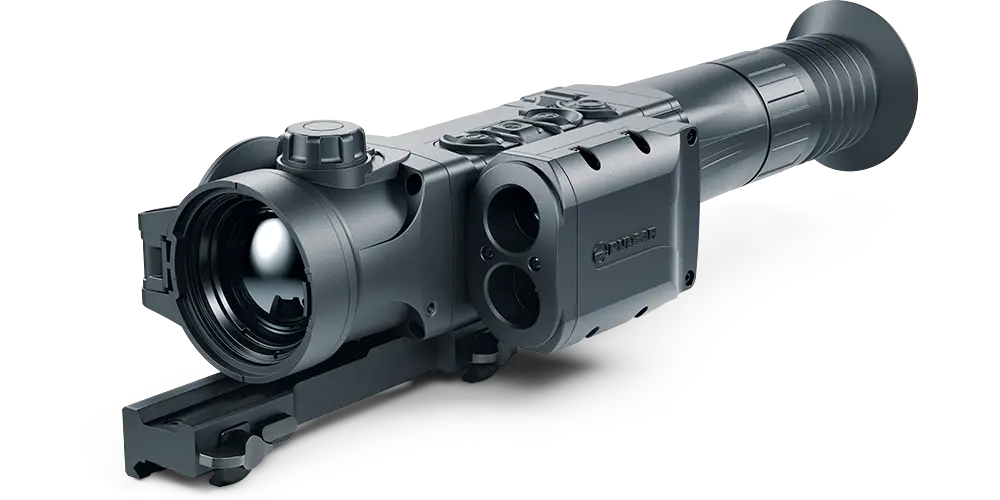
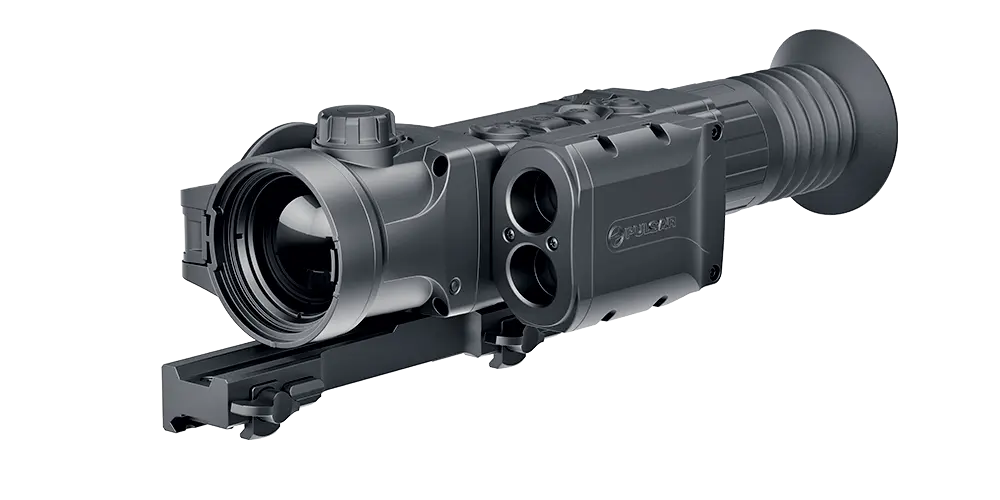
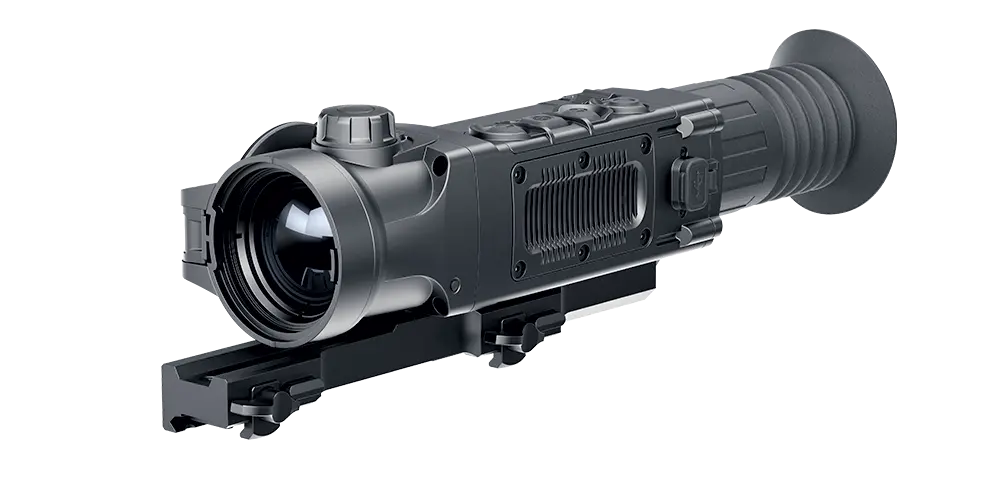
A thermal imaging riflescope is a weapon-mounted optic that detects heat signatures and turns them into a visible thermal image. It helps hunters detect, identify, and aim at game when natural visibility is limited, including in complete darkness and difficult weather conditions.
Unlike conventional optics, thermal riflescopes do not depend on visible light. They reveal heat differences in the environment, helping hunters see what would otherwise remain hidden.
How thermal imaging riflescopes work
Thermal riflescopes use an infrared sensor to detect differences in temperature and convert them into a thermal image. Animals and other heat sources stand out against their surroundings, even when they are difficult to see with the naked eye.
Because thermal imaging does not rely on ambient light, it works in complete darkness. High thermal sensitivity also helps preserve image detail when temperature contrast is low, such as in fog, rain, or high humidity.
In the field, this means faster detection, clearer observation, and more information to make a confident decision before taking a shot.
Read more: How thermal scopes work: Pulsar expert explains
Key features of thermal imaging riflescopes
The performance of a thermal riflescope is about more than how far it can detect a heat signature. The best results come from the right balance of image quality, thermal sensitivity, optics, ranging, precision, and reliability.
- Detailed thermal imaging: A high-resolution thermal sensor reveals more detail across the scene and maintains a more informative image when magnification is increased.
- High thermal sensitivity: Low NETD and sNETD help reveal subtle temperature differences, keeping animals distinguishable from the background in fog, rain, humidity, and other low-contrast conditions.
- Long-range detection: The combination of a sensitive sensor and powerful objective lens determines how far a heat signature can be detected, giving hunters more time to locate and observe game.
- Laser rangefinding: An integrated laser rangefinder provides precise distance measurements without the need to switch to another device.
- Ballistic calculation: Compatible riflescopes can combine measured distance with ballistic data to calculate a recommended point of aim, supporting more precise shooting at longer ranges.
- Field of view and magnification: A wide field of view helps hunters scan and track moving game, while higher magnification provides more detail when observing and aiming at greater distances.
- Reliable zero and recoil resistance: A hunting riflescope needs to maintain its zero through repeated recoil and perform reliably with the firearm and caliber it is designed for.
- Field-ready design: Waterproof construction, dependable battery life, intuitive controls, and reliable performance across changing temperatures keep the riflescope ready for demanding hunts.
How to choose a thermal riflescope
Start with how and where you hunt. Specifications matter, but their real value depends on your terrain, typical distances, target species, and hunting style.
- For forests and shorter distances, look for a wider field of view and lower base magnification. This makes scanning, fast target acquisition, and tracking moving game easier.
- For mixed terrain, choose a balanced combination of field of view, magnification, image detail, and detection range. This gives you flexibility as distances and surroundings change.
- For open terrain and longer distances, prioritize image detail, higher magnification, longer detection range, and accurate distance measurement. An integrated laser rangefinder and ballistic calculation can provide additional support for longer-range shooting.
- For difficult weather, pay close attention to thermal sensitivity. Lower NETD and sNETD values help the device distinguish smaller temperature differences when thermal contrast is low.
Remember that detection is not the same as identification. A riflescope may detect a heat signature at a great distance without providing enough information to identify it confidently. Detection range should therefore be considered together with sensor resolution, optics, magnification, and your realistic shooting distances.
The right thermal riflescope is ultimately the one that gives you the clearest and most useful information for the conditions in which you hunt most often.
Read more: How to choose thermal riflescope for hunting
Why choose a Pulsar thermal riflescope
Pulsar thermal imaging riflescopes are developed and manufactured in Europe for hunters who expect image quality, precision, and reliability in real field conditions.
The Pulsar range covers different hunting styles and environments – from compact riflescopes built for mobility to advanced long-range systems combining high-definition thermal imaging, integrated laser rangefinding, and ballistic calculation.
Built to withstand recoil, changing weather, and demanding field use, Pulsar riflescopes combine rugged construction with advanced thermal imaging and practical features designed around the hunt.
Whether you hunt in woodland, mixed terrain, or across open fields, Pulsar gives you the tools to see more, understand the situation, and make a confident shot.
Find the best Pulsar thermal scope for your hunt
There is no single thermal riflescope that fits every hunt. Explore our field-tested guides to find the Pulsar riflescope that best matches your terrain, target species, and typical shooting distance.