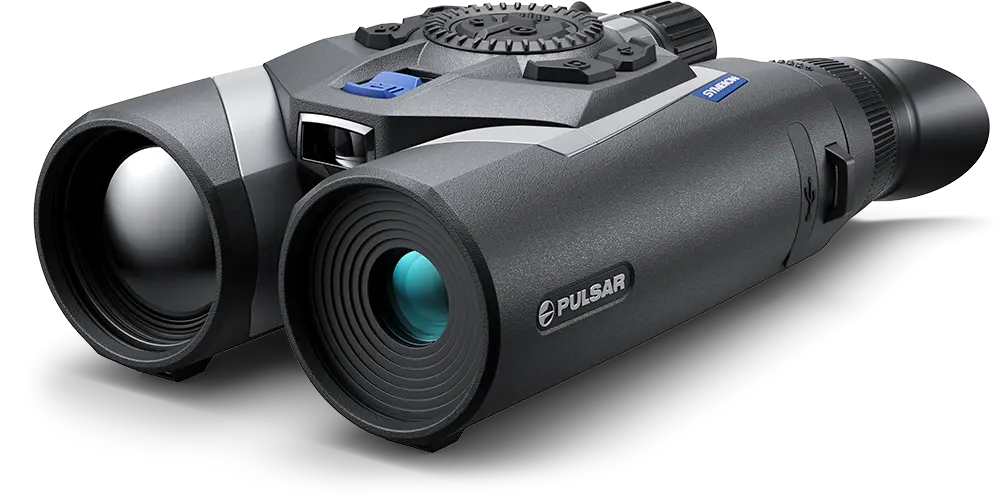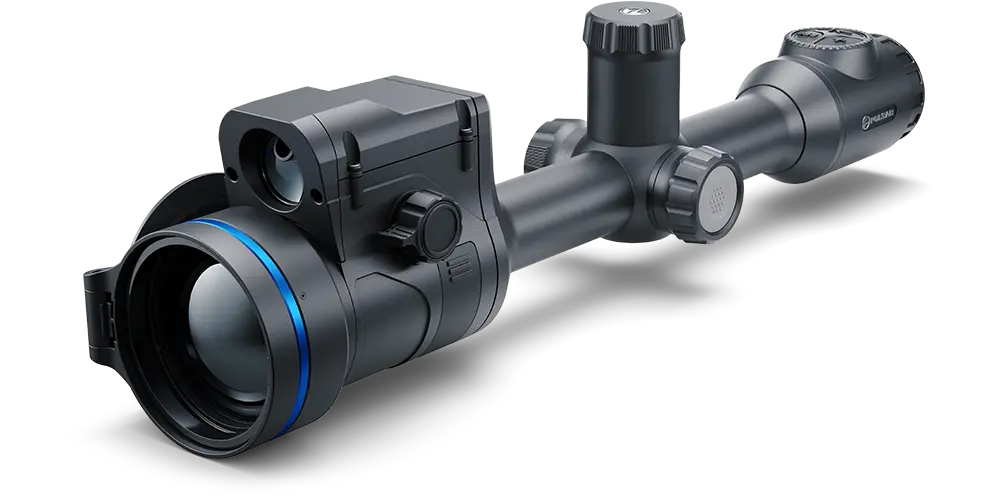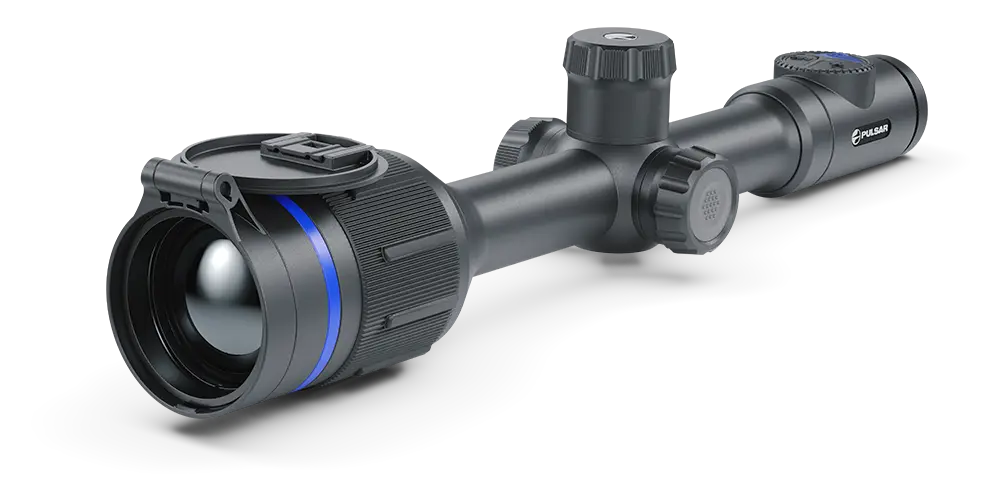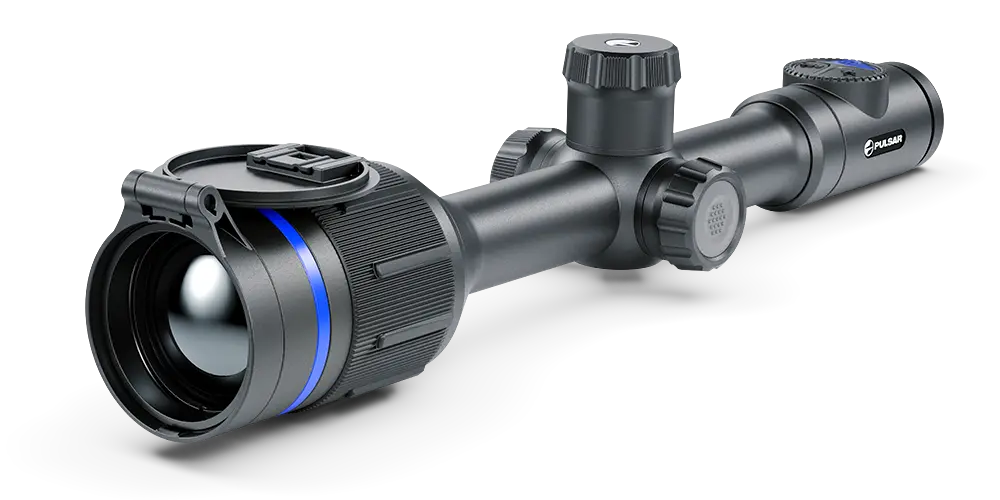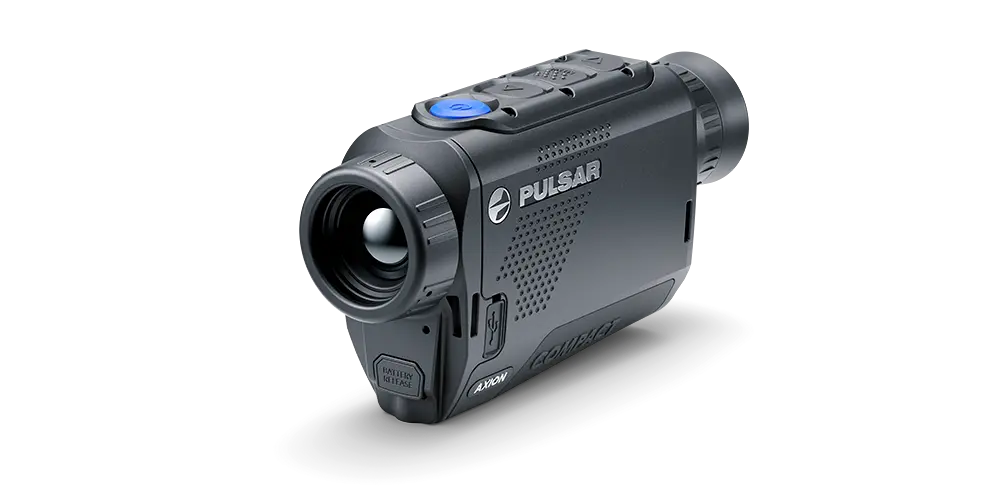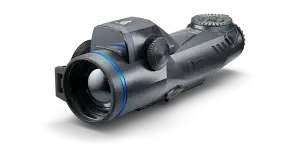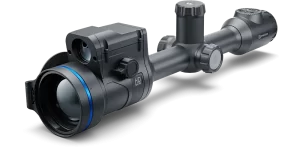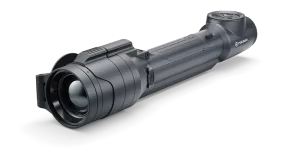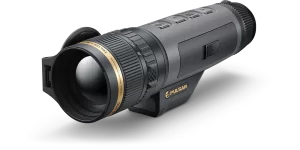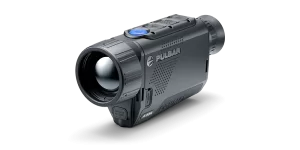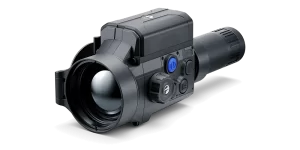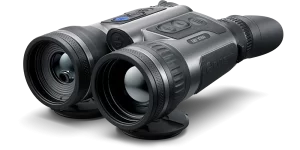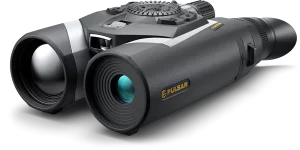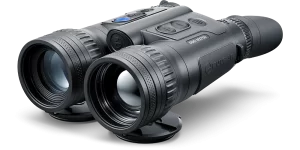

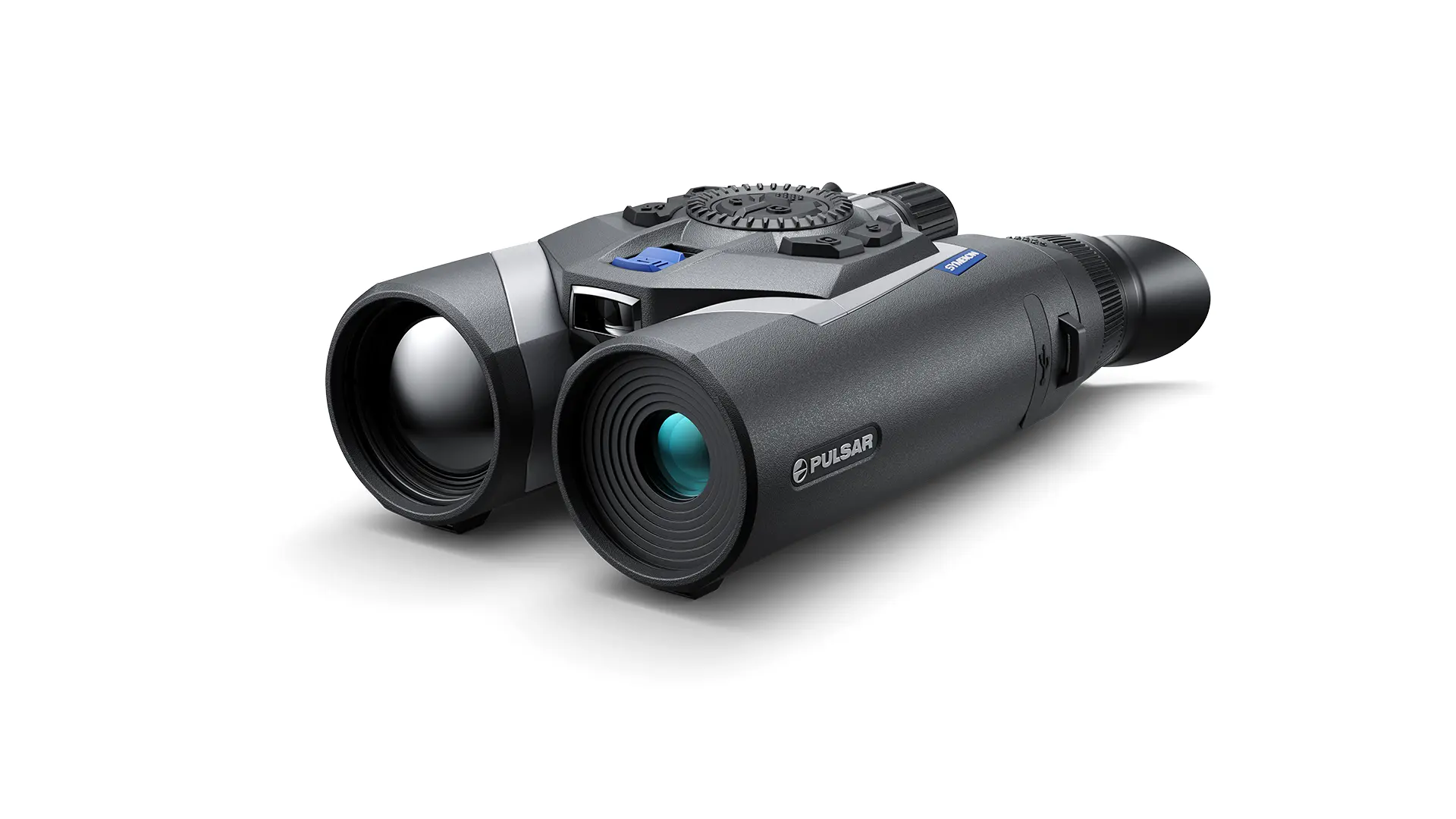
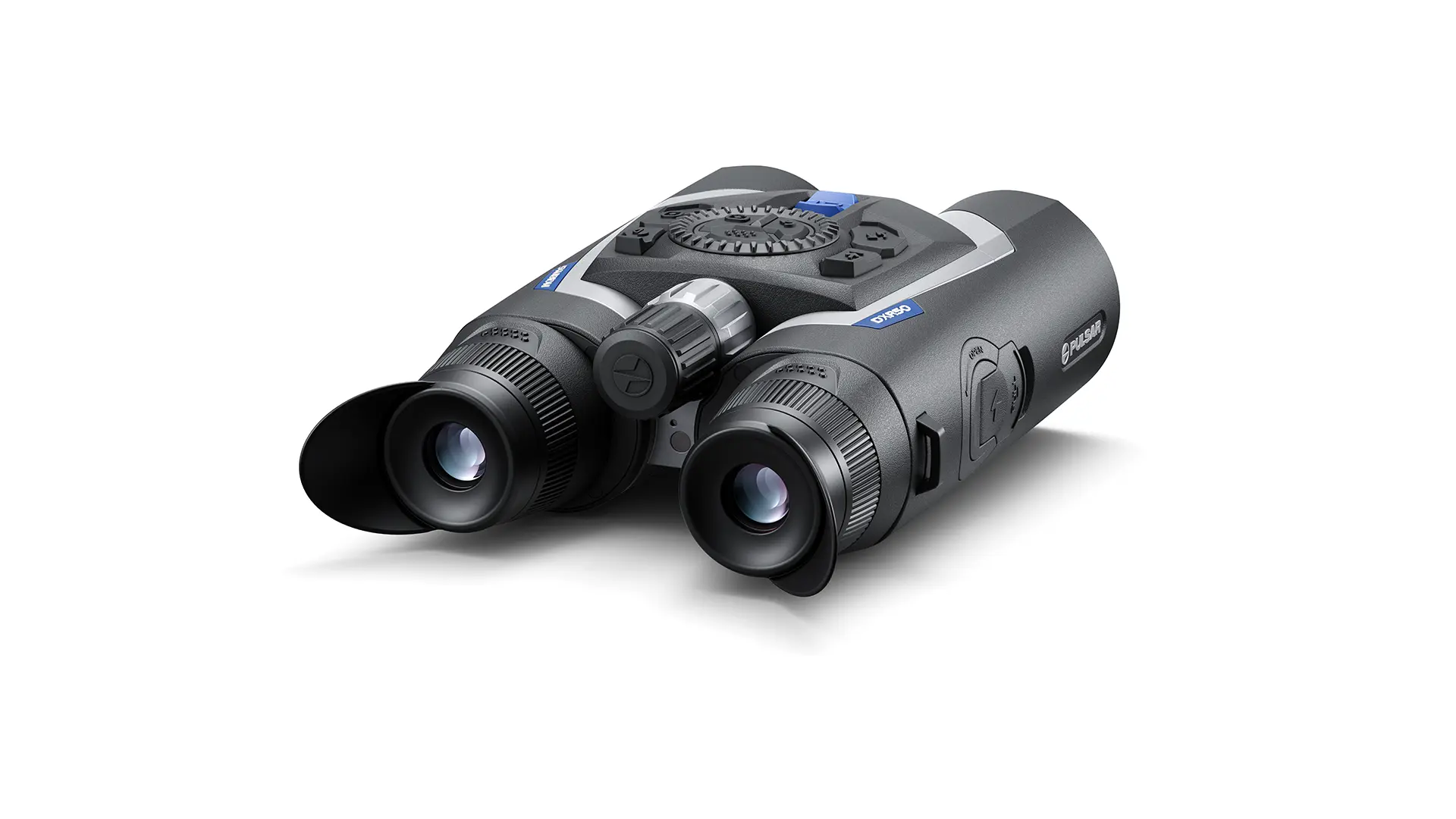
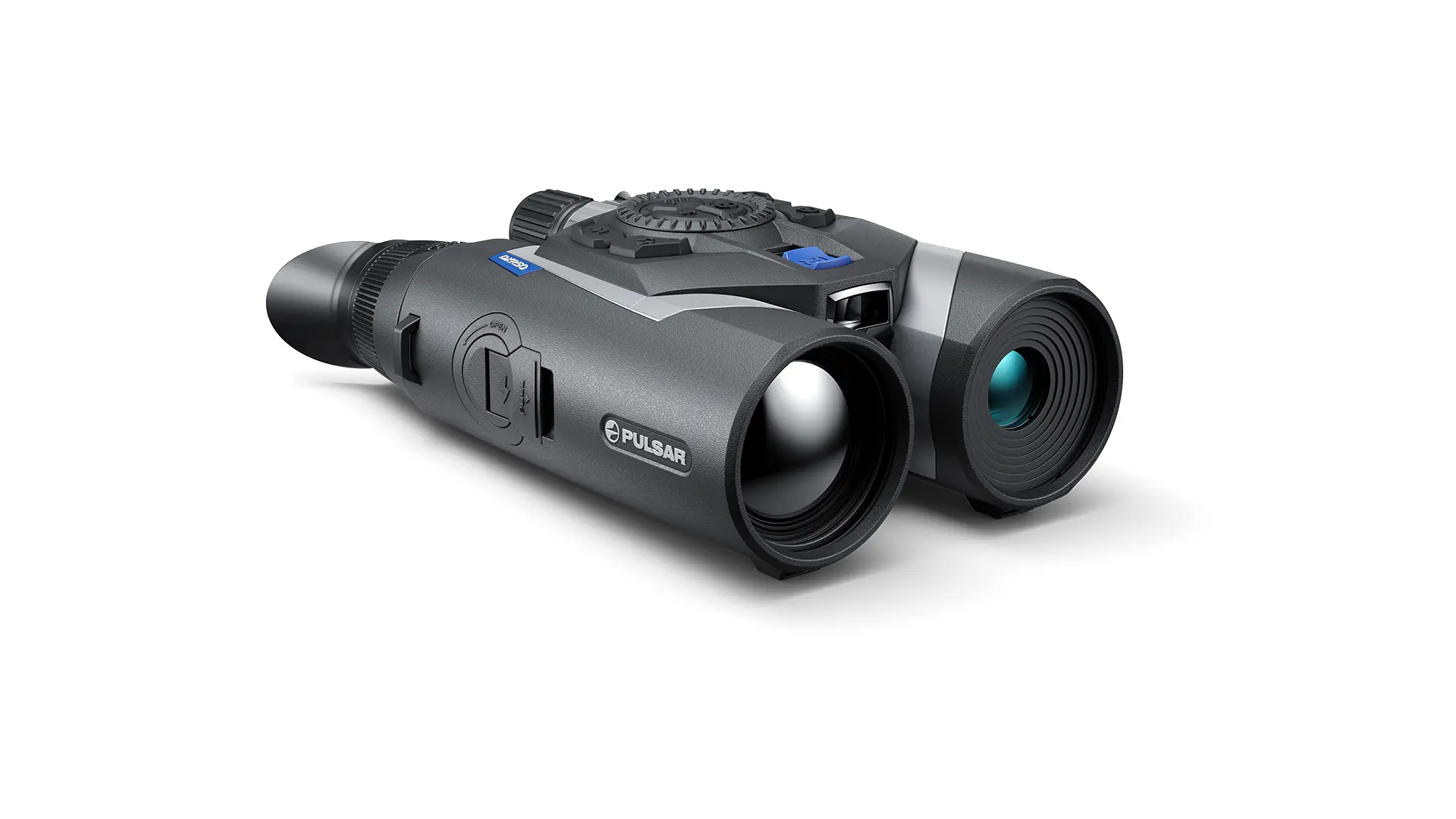
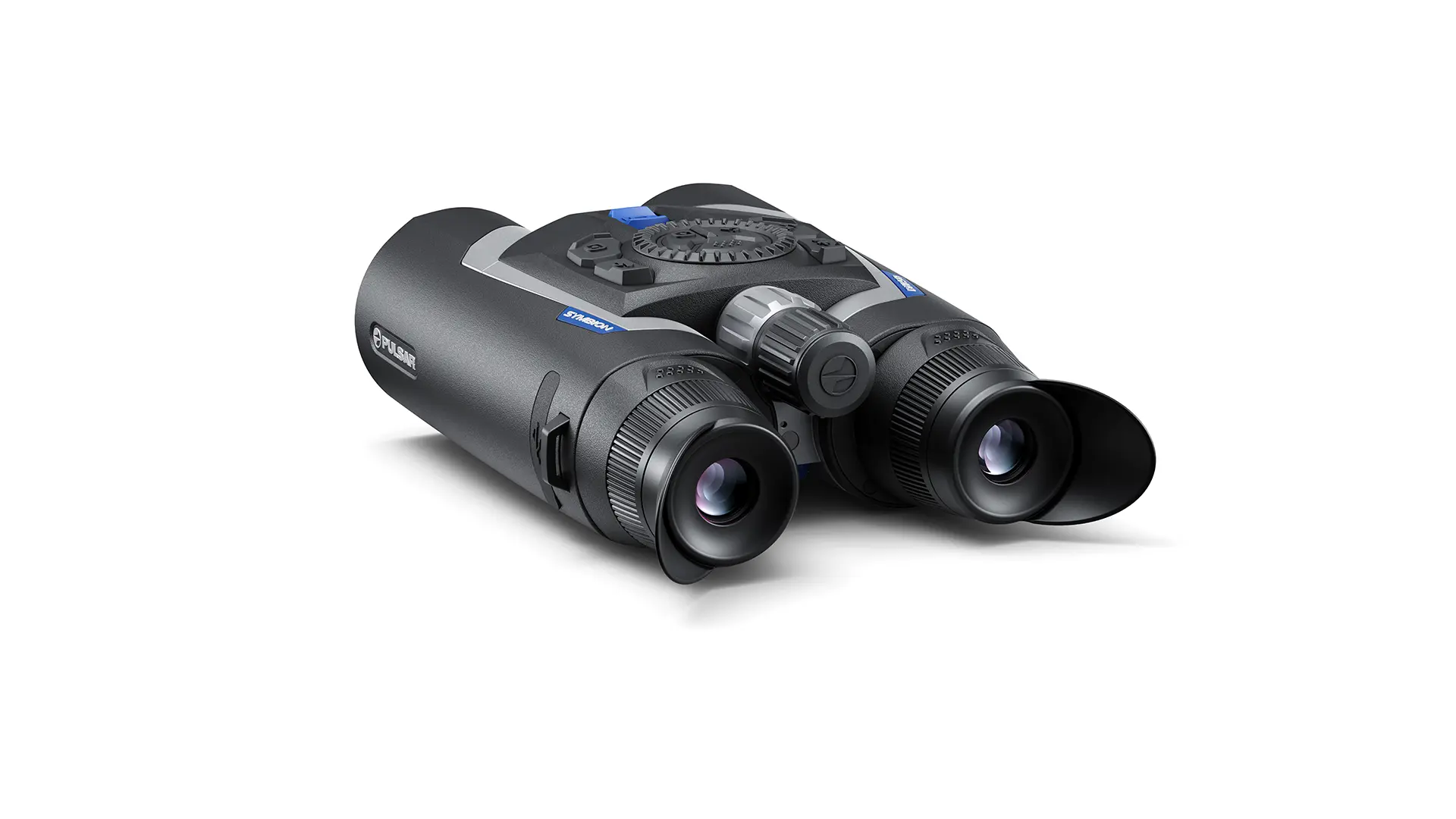
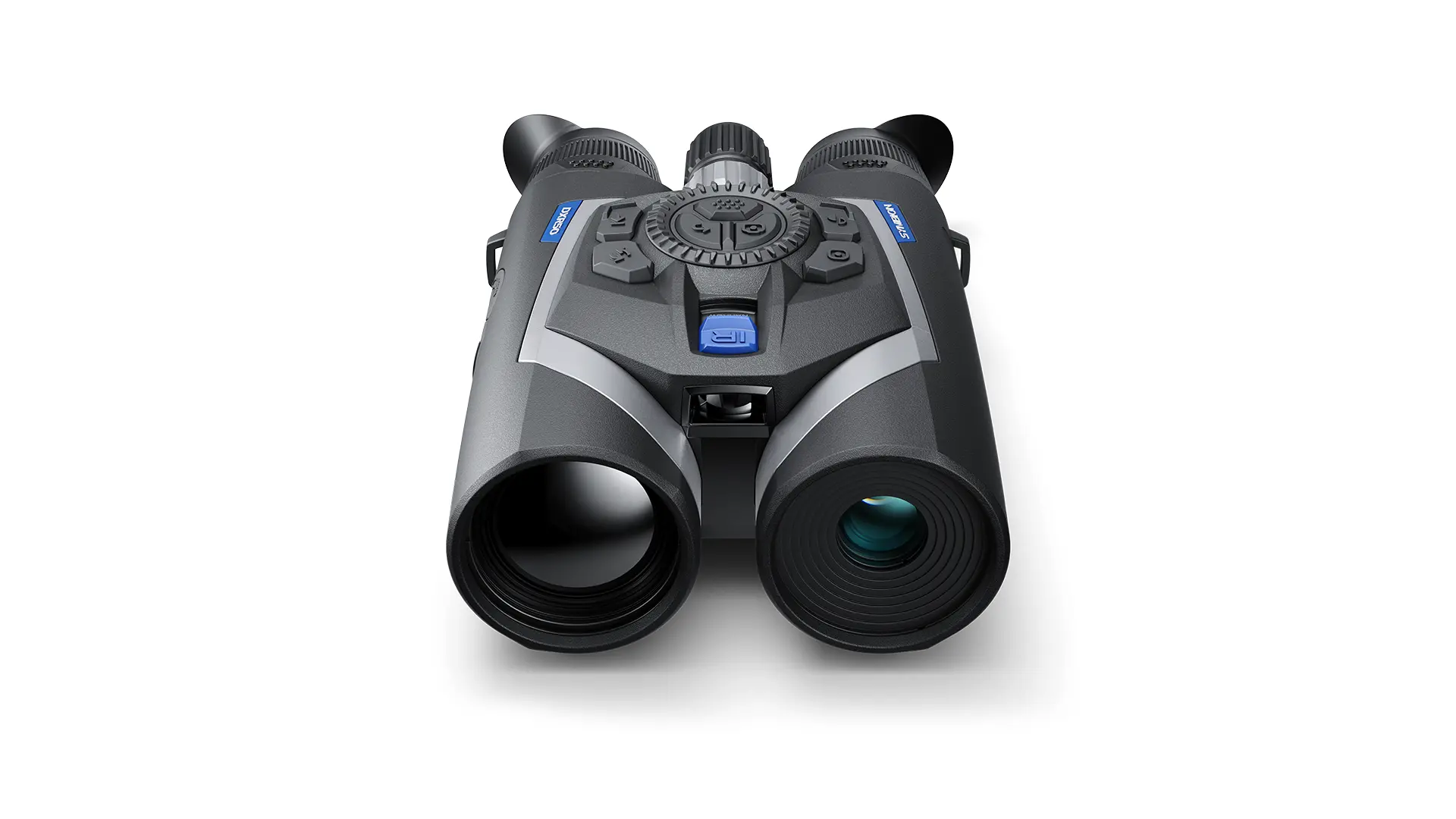
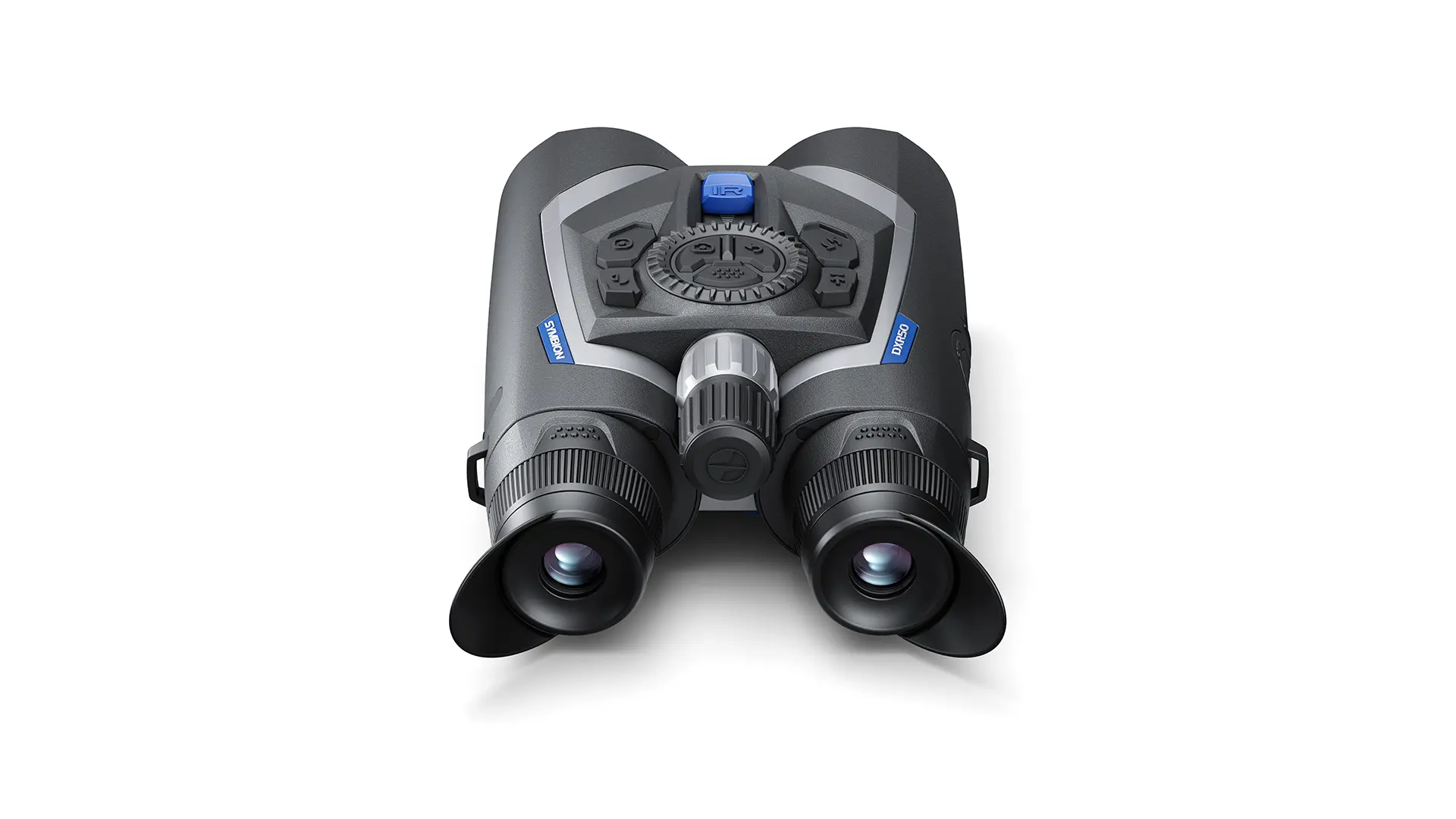


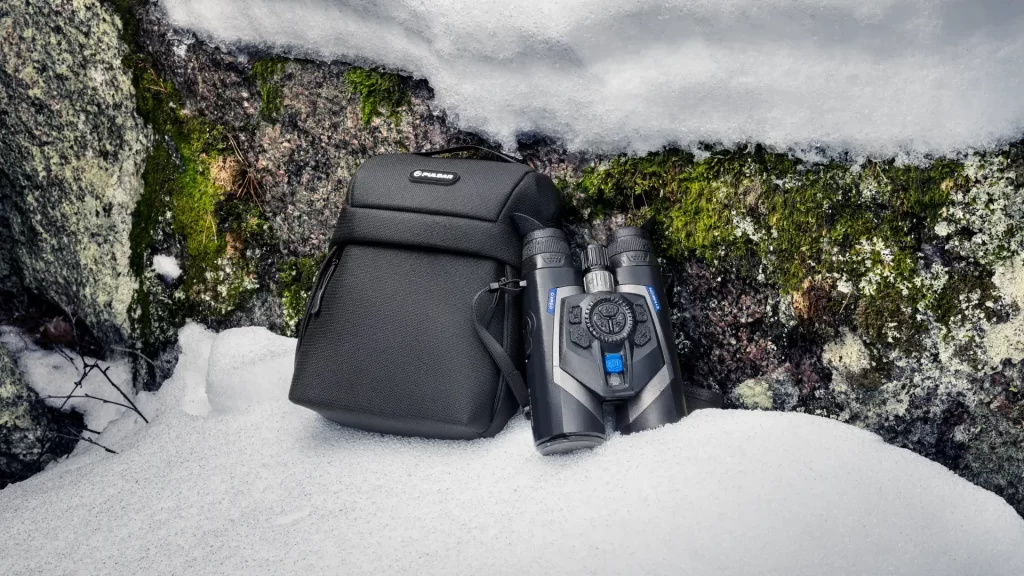
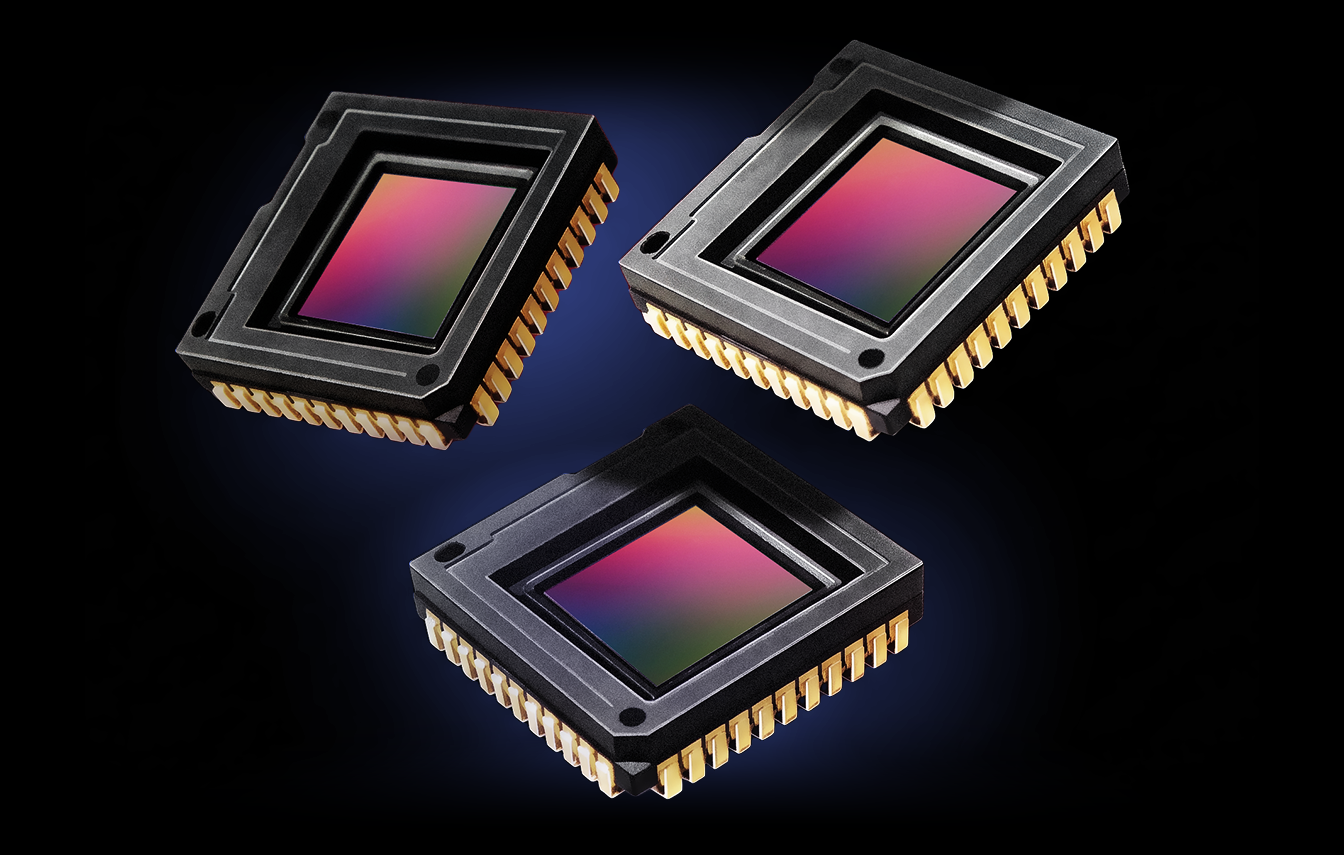
The thermal images are driven by the binoculars’ 640×480, 12 µm sensor. Rabbits, foxes, and other smaller game don’t get lost in the image the way they might with a lower-resolution sensor.
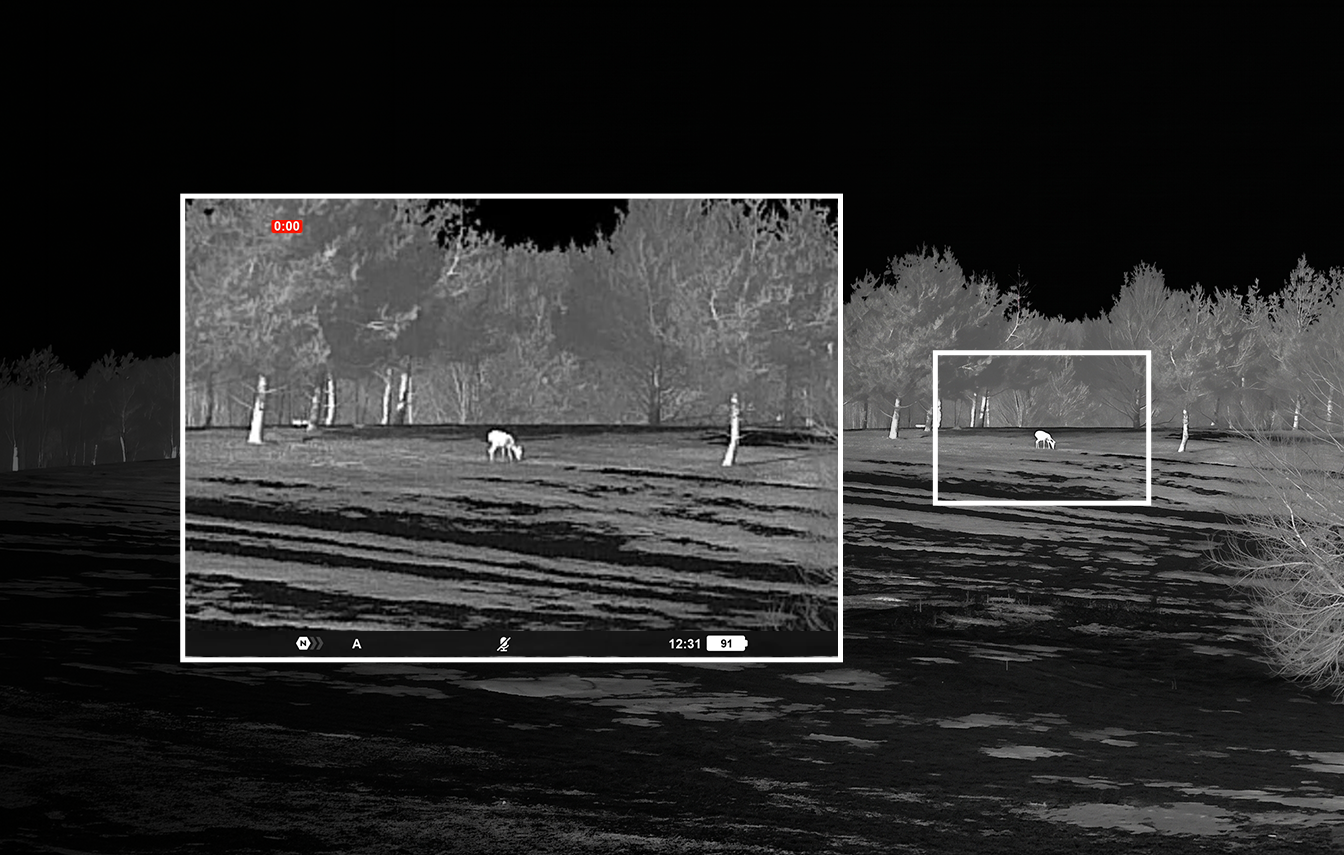
With a higher thermal base magnification, the Symbion LRF DXR50 keeps the field of view naturally tighter and closer, which suits the rhythm of stand hunting. It’s meant for observing one area closely over time, rather than sweeping across wide terrain.
NETD • thermal sensitivity
LRF accuracy
thermal & digital
thermal detection
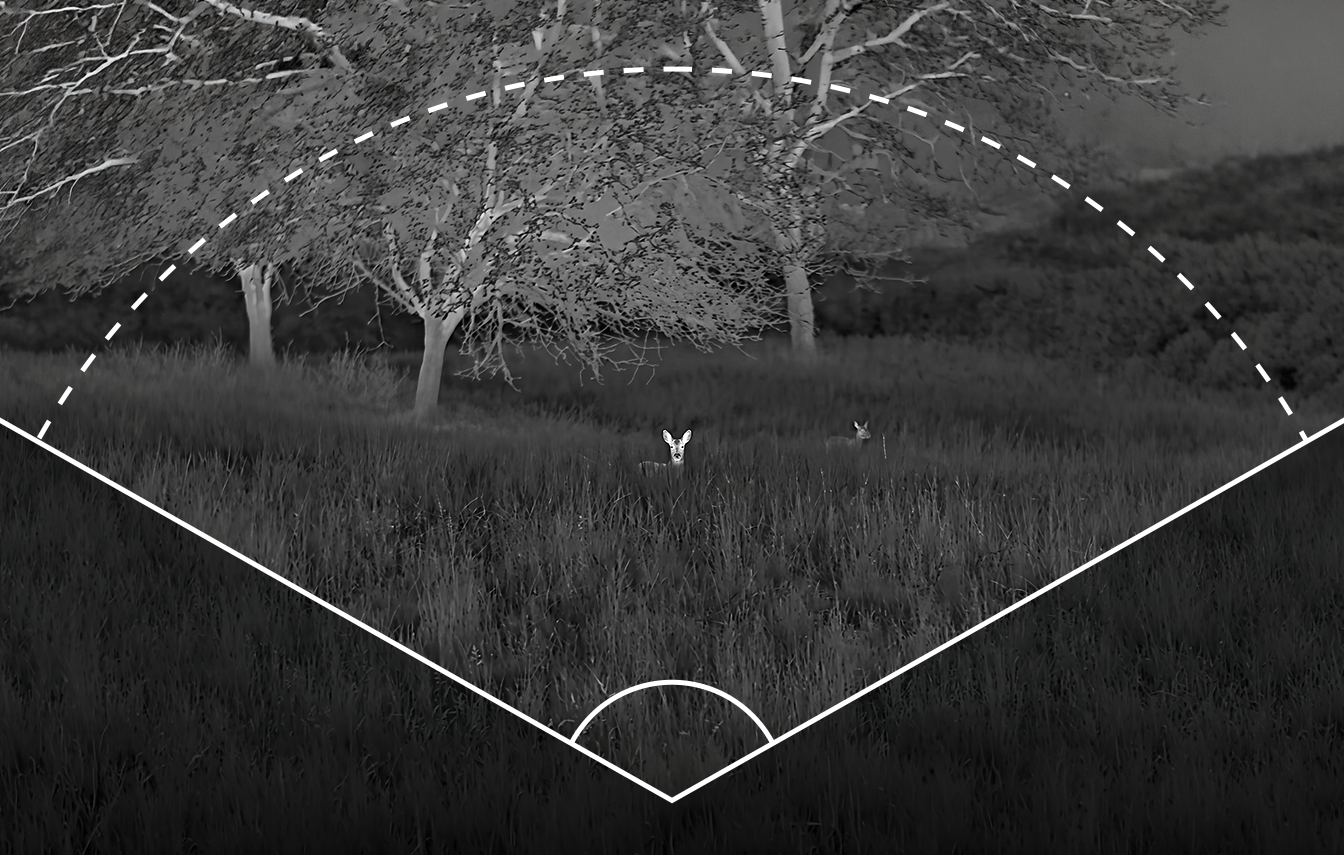
At 8.8° field of view, the Symbion LRF DXR50 is built for hunters holding a position, watching closely for small movement on the treeline or open fields. It’s a tool for a professional that values precision over panoramic vision.

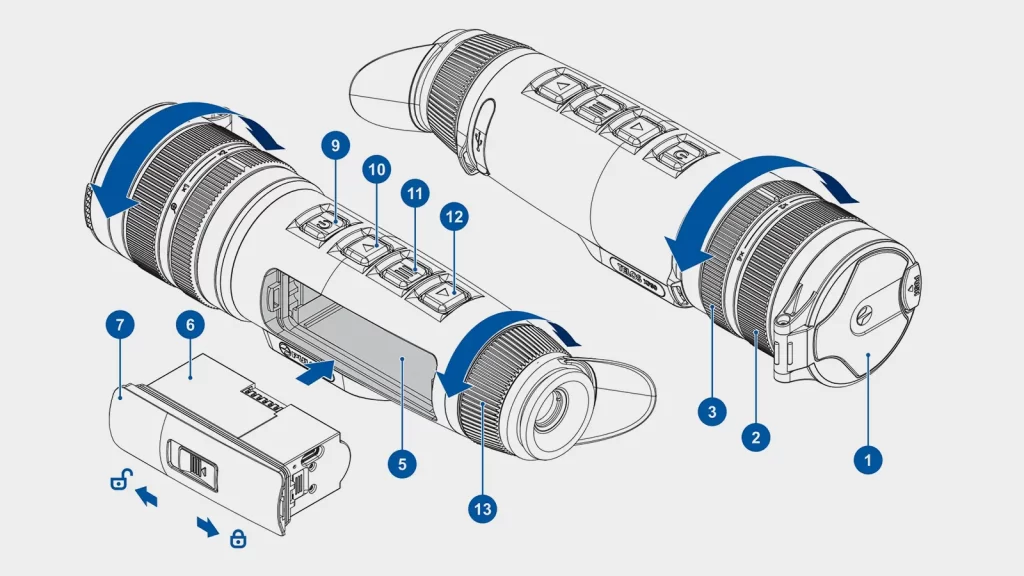
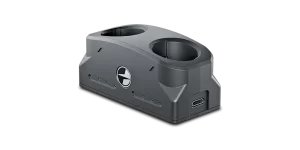
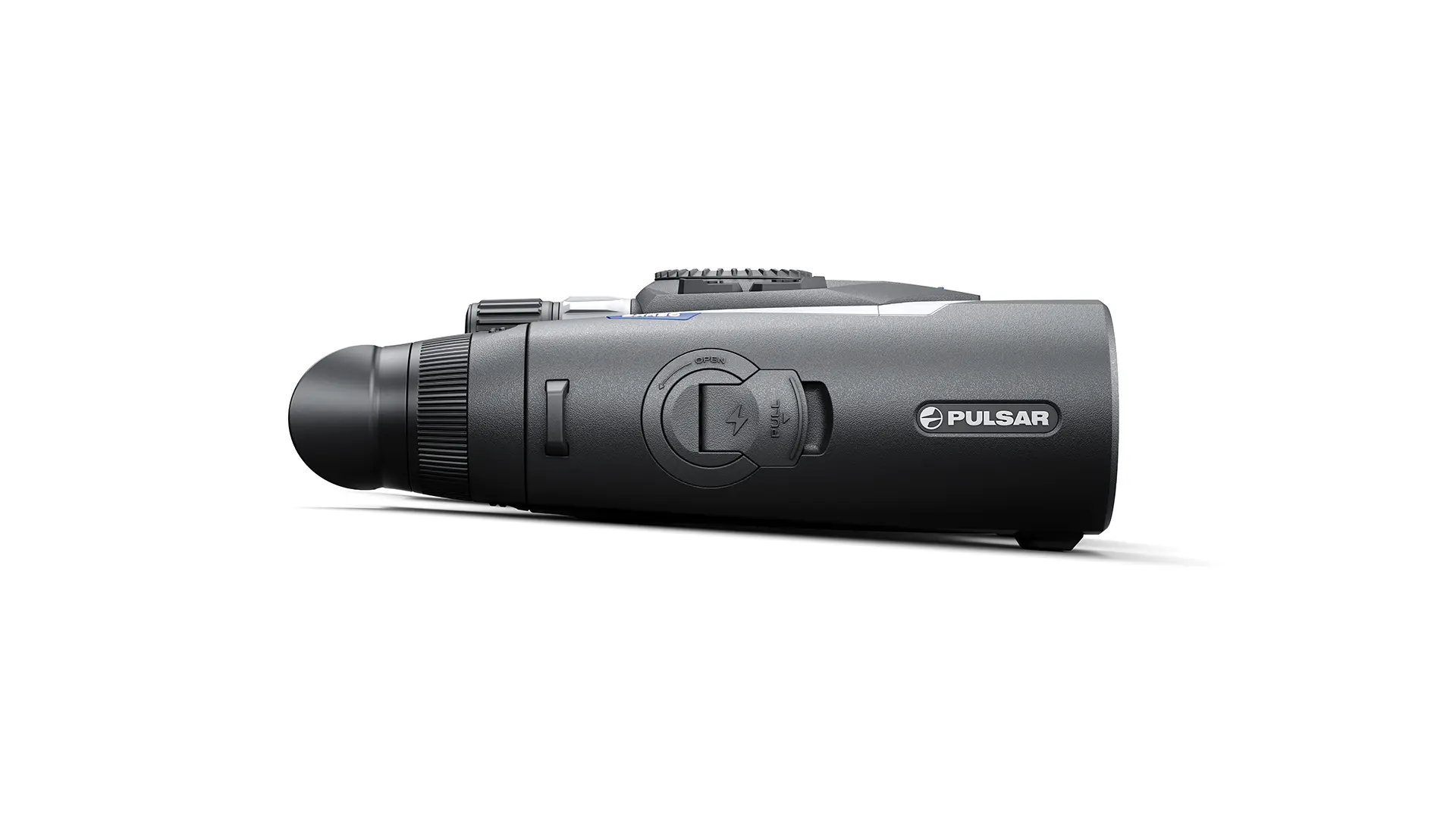
Designed for extended use, the Symbion LRF DXR50 provides up to 10 hours of battery life. The rechargeable, quick-change battery system ensures you can continue your observation without lengthy interruptions when additional power is required.